
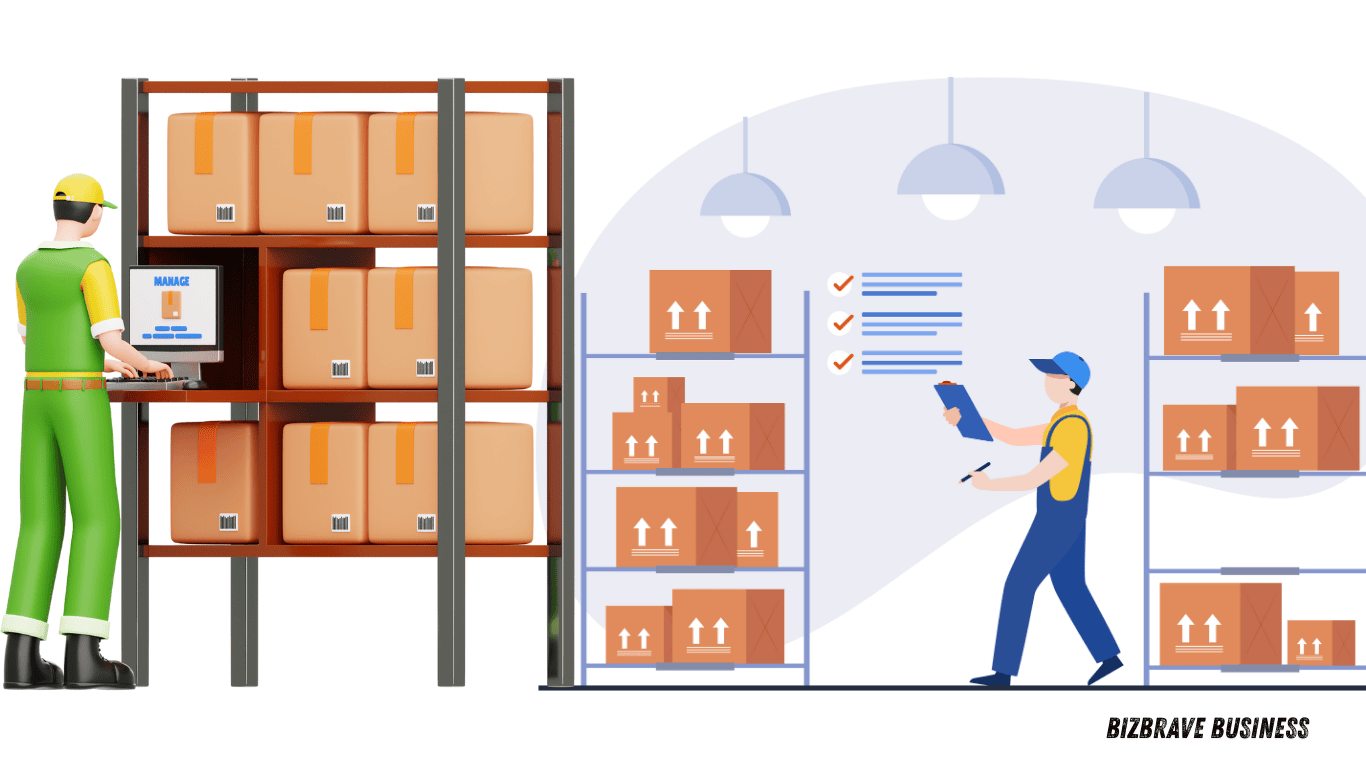
I am working with manufacturing business. One fact is always agreed upon in my experience of spending most of my time working closely with manufacturing businesses, small factories to fast growing brands they do not lose money in production, they lose money in the management of inventory.
The majority of producers pay much attention to sales, machinery, or people. But there is a silent bottleneck in the middle of it-inventory.
Late deliveries of raw materials, stock on hand, incorrect records of stock and production lag are part of the daily reality. This is precisely the point that manufacturing inventory management software can be a business-critical tool rather than an IT upgrade.
Let us divide this down into practice, real problems into real solutions.
The reason why manufacturing inventory management software is no longer optional.
Today manufacturing is linear no more. You are managing:
There are various suppliers of raw materials.
Goods in warehouses are finished.
Send to distributors, dealers or market places.
Attempting to cope with all this using spreadsheets or disconnected systems results in:
Production halting stockouts.
Blocking working capital by current overproduction.
Late deliveries which hurt trust.
Based on the current market dynamics, the use of inventory management software is gaining momentum at a high rate through automation, growth of e-commerce and omnichannel selling. Companies that fail to move on this in good time usually find it a challenging task to upscale.
Simple truth: Unless you have real-time inventory visibility, then you are making blind decisions.
Typical Inventory Problems experienced by business manufacturing.
1. Stockouts That Cripple Production – One raw material that is not available can halt a whole production line. Most manufacturers notices the shortages when it is too late- due to the manual updating of the data or lagging.
2. Excess Inventory & Dead Stock – When production is over, it is safe, but it silently suffers cash blockage. Goods in warehouses decrease the liquidity and raise storage expenses.
3. No Single Source of Truth – Various other numbers are typically used by production, warehouse, sales and finance teams. This discrepancy creates confusion, blame and bad planning.
4. Delayed Order Fulfillment – With discoordinated inventory information, customer commitments are blindly made- leading to pleasant customers receiving their orders late.
The actual work of manufacturing Inventory Management Software.
A contemporary manufacturing inventory control software does not simply track inventory.
The Inventory Visibility in Real Time. Raw materials, WIP and finished goods, across locations can be viewed in a single dashboard, and it is updated in real-time.
Automated Stock Movement Material issues, production consumption, inter-warehouse movements, and returns are automatically recorded and minimized human error.
Demand Forecasting and Production planning. The system aids in forecasting demand based on historical data hence you make what sells rather than what guesses tell you.
Multi-Warehouse/Multi-Channel Control. Selling on dealers, distributors, and online platforms, inventory remains aligned everywhere.
Features that are a Must in Manufacturing Inventory Management Software.
Practically, the following are the most important features:
Bill of materials (BOM) control.
Batch, lot, FIFO / FEFO tracking
Integration of barcode and scanners.
Automation of purchases and production.
ERP, CRM and marketplace integrations.
Decision making advanced reports.
Top 7 Manufacturing Inventory Management Software
The following are best-tested solutions that manufacturers the world over agree with. Each is applicable to a stage of business.
Zoho Inventory
Easy to use, and affordable particularly to SMEs. Complementary to finance and CRM tools. for small and midium interprises is best.
Unicommerce
An effective remedy to manufacturers selling in marketplaces, D2C websites as well as offline. It provides inventory real-time integration, powerful integrations, and automation scalability.
Best Production of brands that are venturing into multi-channel sales.
Odoo Inventory
Highly flexible and modular. Best suited in the case of manufacturers that need personalized workflows and ERP-level control. Best suited: Companies that have intricate internal operations.
SAP Business One
Very high compliance, reporting and scalability solution. Best for large enterprises
Sortly
Targeted at automation-intensive companies that are well established in the market. Most suitable when dealing with manufacturing brands that are sold online extensively.
Browntape
Economical remedy of a centralized inventory in a number of selling channels. Best fit: Developing D2C and marketplace sellers.
Increff
Intelligence on stock and allocation using AI to minimize dead inventory. Best when: You are selling apparel, footwear and fashion manufacturers.
Fishbowl Inventory
Manufacturer-specific, using BOM, production and warehouse automation. Best in: First-to-manufacture corporations around the world.
Vinculum
Powerful omnichannel and multi-warehouse operations of enterprise scale.Best in large retail-oriented manufacturers.
While finalizing Inventory management software keep below things in mind
Production volume. is this software suitable for my production volume
Does selected software supports manufacturing workflow.
check analysis and forcasting
Check other integration like ERP, CRM or Marketplace.
check its customer support.
Consultative tip:
The most ideal software is the one that is in constant use by your team.
Top Five Implementation errors.
Purchasing software without process knowledge.
Skipping employee training
Inadequate transfer of the old systems data to new systems.
Software is expected to cure processes that are broken.
Reality check:
Discipline is enhanced through software. It doesn’t create it.
Production Inventory Control Software as a Growth Tool.
Faster production cycles Reduced blockage of working capital. Increased dealer and distributor confidence. ERP and CRM growth on a solid basis. Manufacturers that skills in mastering inventory have taken control over cash flow, planning and customer commitments.
Concluding Remarks: Inventory Control Business Control.
One thing was similar in all manufacturing businesses I have observed to expand sustainably, which was clear visibility of inventory.
The production of inventory management software is no longer an issue of efficiency. It is a matter of confidence- confidence in planning, delivering and scaling.
Inventory is a good place to begin in case you intend to grow in 2026 and beyond. Once that is strong, everything becomes easy.