11 Business Concepts: A Practical Guide towards Expanding Businesses.

business concept

When we take example of Company’s like Nokia it’s become Stuck after a couple of years. This problems teach us motivation and capability are not really the problem in majority of the case. The problem is vague or poor business idea or wrong business concepts.

The central point of your business is a business concept. It tells how you do what, to whom you do it, how you create value and how you make money. At this point, it is easy to make decisions. Even good efforts give bad results when it is unclear.

In my experience of working closely with owners of business, I can easily say that businesses do not fail overnight. When they are not identifying, revising, or updating their business idea with time, they lose focus gradually.

The following is a list of 11 practical business concepts with explanations in a simple and realistic manner that every business owner must be familiar with and implement.

1. Problem Solving Approch

When business is starts it address an issue. The better the problem and the more clear it is, the better the business. Customers do not purchase products and services. They purchase reprieve of pain, stress, delay, confusion or loss.

What I observe is that a major pitfall that most businesses commit is the overemphasis on features and underemphasis on problems. Failure to articulate the problem you are solving will make it difficult to customers to comprehend why they have to use you.Successful companies remain near customer areas of pain and develop solutions on them.

The most appropriate question to pose on a regular basis is the following one:

Ask Yourself

What problem does my customer have in their lives before they see me, and how does their life become better after they see me?

2. Value Proposition

Value proposition is a response to one question is Why should a customer select you over the rest? This is not concerned with being less expensive. It is of being more relevant and clear. The saving of time, minimizing effort, minimizing risk, enhancing quality, or heightened support can be a source of value.
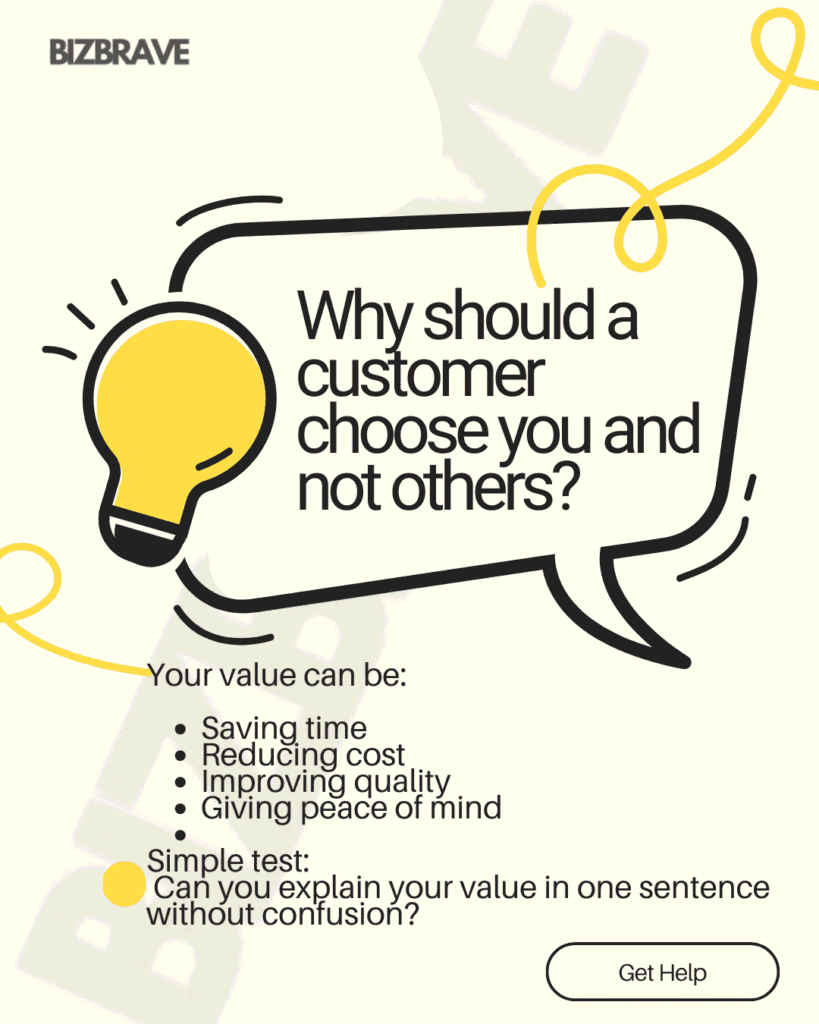
A strong value proposition means that customers will not bargain with you since they realize there are benefits. Personally, whenever your value proposition cannot be summarized in a single line, then it requires improvement.Trust is constructed as a result of simplicity, and sales are made with trust

3. Target Customer

Attempting to please everybody is one of the largest growth killers. A clear target customer is characterised by a clear business concept. This involves their industry, size, level of budget and style of decision-making.
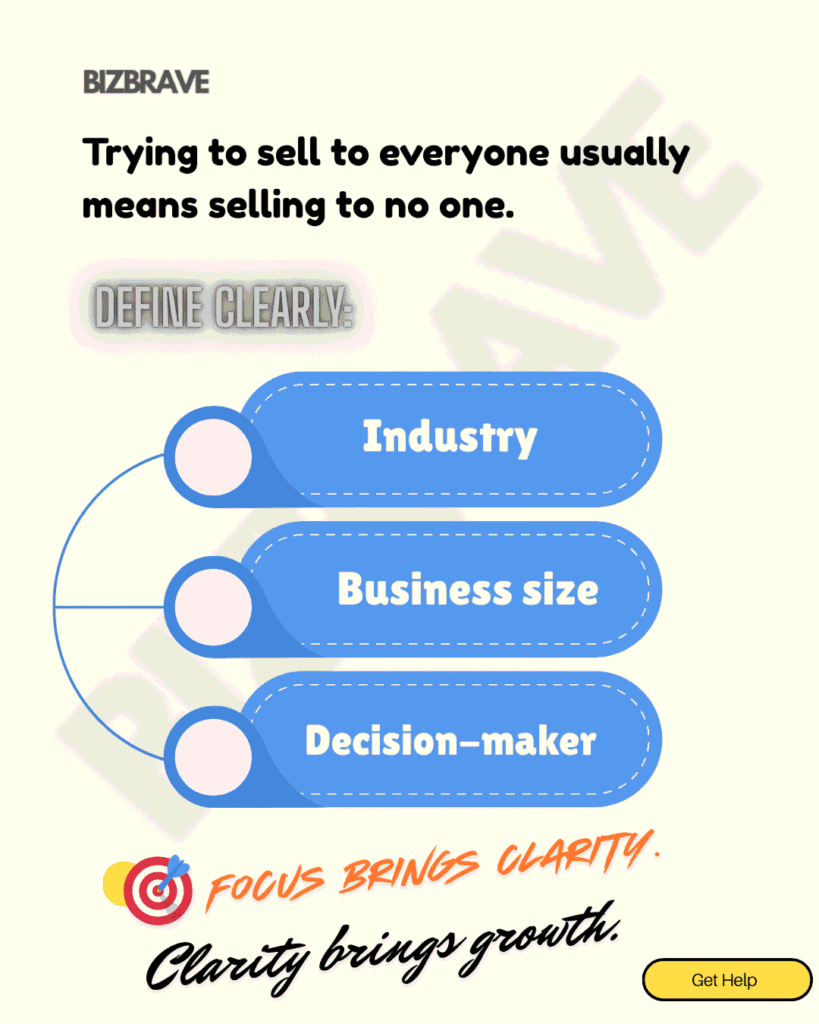
This is because when you know perfectly who your perfect customer is, your marketing will be targeted and focused, communication will be better and your product or service will be more efficient.

More growth is achieved when your message seems personal to the right audience. Powerful companies do not pursue clients.They are specific when attracting the right ones.

4. Revenue Model

Several of the businesses survived so hard yet find themselves in great financial difficulties due to poor revenue model.Revenue model describes the flow in of cash into your by business and the predictability of that flow. Single sale will bring short term revenue, whereas recurring revenue will be stable.

Retainer system, subscriptions, annual term and repeat purchase systems assist businesses to plan better and to grow with confidence. In the long term, companies that can predict their income rest easier and make decisions that are wiser.

5. Cost Structure

The question of revenue is not the end, profitability depends on cost control. Good business idea involves having a good knowledge of fixed costs, variable costs, and unnecessary expenses. Numerous businesses that are expanding do not pay attention to costs.
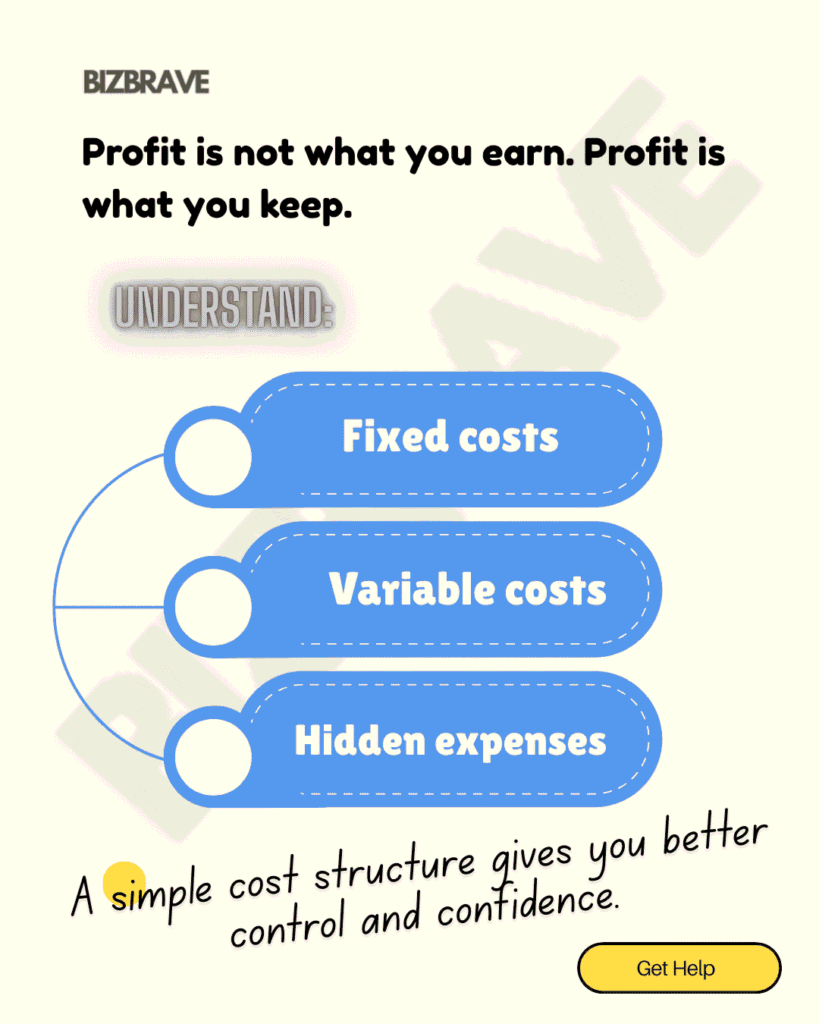
Minor leakages gradually become major losses.When you have an idea of where you spend your money, it makes you take control. In cases where you do not, there is an added stress.

Profitability is not concerned with reducing everything. It involves spending time consciously.

6. Competitive Advantage.

There is competition in any market. It is not whether there are competitors or not, but it is whether you are markedly different in a material sense. Your competitive edge may be trust, speed, experience, service quality, niche focus or operational efficiency. It is not necessary that it is dramatic.

Practically, companies with clearly stated advantage will find it easier to attract good customers as well as deal with under price pressure.

7. Scalability

A business that develops at the expense of increasing workload of the owner is not a growing business. Scalability implies that the business will be able to expand without requiring corresponding increments in the amount of stress, time, and reliance on an individual. Scalable enterprises are dependent on systems, documentation, automation, and trained workforces. The growth must make you freer and not diminish it. A good business idea would always look at the way growth will be managed even before the growth takes place.

8. Process and System

The processes form the main foundation of stability. Businesses operate without systems relying on memory, people, and day-to-day firefighting. This brings disparity and exhaustion. Sales, operations, inventory, customer support, and finance have clear processes and decrease errors and enhance customer experience. Systems enable business to provide quality on the same level all the time.
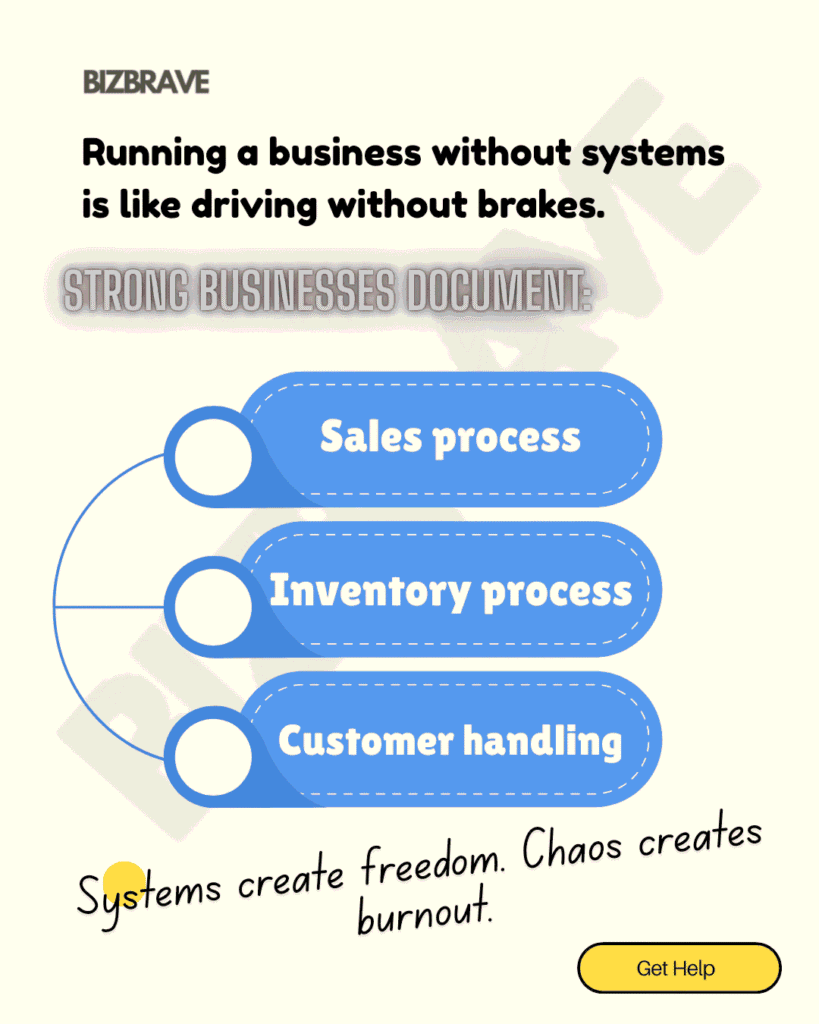
Through experience, I can say this with a lot of certainty: systems do not inhibit creativity. They protect it.

9. Customer Experience Idea.

Customers will never remember the things that you have said, but they will always remember the way that your business made them feel. Customer experience is associated with all the interactions, including initial contact to the aftersales service. Long term relationships are developed through simple communication, timely response, clear pricing and dependability of delivery. Discounts do not make loyal customers. They are formed through the trust and care. Customer experience is not something that is given second consideration in a strong business concept.

10. Digital Enablement

Digital tools have ceased to be an option in the business world of today. They assist the businesses in working efficiently, making sound decisions and expanding easily. Customer management systems, inventory systems, accounting and reporting systems save on manual work and errors. Your team should not be distracted by technology. Intelligent companies apply online solutions to streamline the processes and enhance visibility in businesses.

11. Long-Term Vision

The profit without the long-term perspective is confused as short-term profit. Looking through the future helps in decision making, alignment of the team and brand building. Having a clue of where you want your business to be within three and five years will aid you say no to any distractions and yes to the right opportunities. Sight generates concentration, endurance and patience. Visionary businesses are also less likely to be impacted by difficulties since they understand the path they are heading to.

Final Thoughts

A business idea is not a singular activity. It is an organic structure that should change as market, customer expectations and business maturity change. Examining your business idea periodically can make you relevant and competitive. When you get stagnant in your business, don’t switch products or get additional employees at once. To begin with, re-examine your business idea.

Clarity, more often than effort, is the best result-producer. Successful companies are not created accidentally. They are constructed through clear thinking, unwavering execution and customer oriented ideas.When you build a strong base, then development is a by-product. You can continue the discussion in case you are not sure or you want to talk about what concept your business should have the most at the moment. The right conversation will make growth begin.
Effective Small Business Waste Management Strategies That Cut Costs & Drive Sustainable Growth

Effective Small Business Waste Management Strategies That Cut Costs & Drive Sustainable Growth

Introduction

The Effective Small Business Waste Management Strategies tend to think that waste management is a big company issue. Waste is in actual sense one of the silent profit killers of small enterprises. Poor waste practices which could have been identified in excesses of packaging, unused raw materials, etc will drain money, time and energy without our realization.

Good waste management plans of small businesses are not only concerned with environmental protection. They are concerning the operation of a smarter and leaner business that would make more profit. Proper management of waste makes the operations effective, the cost goes down and the customers develop trust.

This blog is a challenge to the conventional way of thinking and provides an opportunity by giving a few practical steps and suggestions that would enable the small businesses to rethink waste as an opportunity and not a burden.

Learning about the Small Business Waste Management Strategies.

What Serious Small Business Waste Management Strategies Met.

The strategies of waste management that are effective in the small business are out of this world. They include preventing waste at the source, streamlining the processes, and making smarter operations choices. Waste does not have to be inevitable, but it is in most cases an indication of inefficiency.

Waste management should be regarded as a business improvement system in the case of small enterprises. A decrease in waste leads to better productivity, increased utilization of the resources available and margins increase automatically. This change in attitude is the initial step to the long-term sustainability.

This only works when waste management is not added as a second alternative at the end of the day; it should be part and parcel of the daily operations.

The difficulty faced by small business in waste management.

The problem is that many small businesses fail to cope with waste management, which seems complicated and costly. Owners are preoccupied with sales, personnel, and cash flow so they do not have much time to examine waste patterns. Consequently, the waste is disposed of as inevitable.

The other problem is an absence of visibility. A business can not notice that it is wasting a lot of material, money and effort without tracking systems. One that is not measured can never be made better.

Finally, there are numerous companies that wait to make a move because they are waiting to have perfect systems. As a matter of fact, minor and repeated changes provide the most significant outcomes.

The Hidden Cost of the Internally Driven Ignorance of the Effective Small Business Waste Management Strategies.

The Effects of Waste on Profit Margins.

Each waste has a price that is associated with it. Surplus stock, spoilage, over ordering and inefficient packaging all profit at the expense of silence. These expenses hardly appear on financial statements hence they are easy to dismiss.

The disposal fees, storage area, and human resource involved in the management of waste, and the fines imposed by the authorities are fast to accumulate. These indirect costs might over time translate to a large proportion of operations costs.

Proper waste management plans of small businesses can be used to recover the profit they lose due to inefficiencies and not because of increasing sales pressure.

Environment and Compliance Risk of Small Business.

Failure to attend to waste management also poses risks to compliance. Each year, the local laws concerning the disposal of waste products, recycling, and pollution are tightening their belts. Small businesses are not free anymore.

On top of legal risks, there is the issue of reputation. The modern customers are attracted to brands, which behave in a responsible manner. Unethical waste disposal may hurt credibility, particularly during the era of online reviews and social media.

Waste management is a responsible way to maintain the continuity of the business and reputation.

Switching to a new way of thinking concerning the management of waste.

Waste Cutting Slows Operations -An expensive Myth.

A lot of business owners feel that the reduction of wastes will reduce the operations. As a matter of fact, the latter is the case. Streamlining and minimizing waste makes operations more efficient and faster.

As an example, improved inventory planning will minimize the rush orders of last minute, stockouts, and unnecessary storage. Clarity of processes leads to minimization of errors, rework, and misunderstanding amongst employees.

Small business waste management plans are in fact more efficient, faster, clearer, and more controlled.

Waste Strategies Only Large Companies Require.

The other assumption that many people make is that waste management applies to large business only. In fact, small businesses are at an advantage since changes can be executed at a faster rate with less levels of approval.

Even minor gains such as a package downsize to minimize or even gain optimization of purchase quantities can realize visible savings. Waste solutions can be tested, adapted, and scaled in a short period of time by small businesses.

Waste management does not regard size. It concerns the will and training.

How to Guide to Good Small Business Waste Management.

Step 1 – simply Waste Audit.

The initial one is to figure out the source of waste. There is no need of a waste audit that requires high-cost consultants or tools.

Determine what is discarded, recycled, spoilt, and wasted. Categories of track include waste of raw materials, waste of packaging, waste of food, waste of paper, or defected products.

Simple exercise tends to expose eye-opening information and fast wins.

Step 2 – minimum Wastes at the Source end.

This is avoiding wastefulness at the stage where the waste becomes a problem instead of handling waste issues. Excessive ordering will result in spoil, damage or obsolete inventory. Liaise effectively with suppliers and place the best orders rather than bulk orders.

Having uniform processes and educating personnel correctly minimizes errors that result in wastes being made in repetition.

Step 3- Before Recycling Not Before Reusing.

When disposing waste to be recycles, consider reuse. Most materials can be reused within the organization through much ingenuity and foresight.

There are often a number of life cycles in packaging boxes, containers and office supplies. Promoting a culture of reusing waste requires the teams to be encouraged to think about reuse.

Reuse lowers the expenses of procurement and increases the usefulness of all resources utilized.

Step 4 – Adopt Recycling Systems that are cost effective.

The process of recycling must be easy and convenient. Find local recyclers that deal with your waste in the industry, be it paper waste, plastic waste, metal waste or organic waste.

Recycling is easy and effective with clear labeling, color coded bins, and minimal employee awareness. Do not have intricate systems which are hard to keep.

The best strategies in waste management of small businesses are simple and consistent.

The place of technology in the effective waste management strategies in a small business.

Waste Tracking Digital Tools That are easy to use.

It is important to note that technology is an important part of contemporary waste management. There are straightforward digital tools that can be used to monitor the pattern of inventory, usage, and wastes effectively.

ERP and inventory management systems avoid stock-up and wastage of materials. Even simple spreadsheets can be a source of strong insights when the information is updated regularly.

The predictability of the improvements is not guesswork but rather a decision that has been made based on the available data.

Automating Waste Reduction by Improving Planning.

Automation does not imply a lot of investment. Demand forecast, reorder alerts and production planning tools are useful in aligning supply to actual demand.

As the planning becomes better the wastage is reduced automatically. Companies cease to respond, but they look forward to demands better. Technology helps to reduce wastage and not to make the work heavier.

Constructing a Waste-Aware Business Culture.

Educating Teams on good waste management strategies of small businesses. Staffs are very essential in waste management. Even the best strategies are failed on the execution level without proper awareness.

Short-trainings, postage, and easy-to-see SOPs can be used to explain to teams the importance of waste reduction. The employees will be proactive when they are made aware of the impacts of wastage and cost/growth. Positive behavior is also strengthened by little rewards and rewards.

The Role of Leadership in Sustainable Practices.

Leadership sets the tone. When teams are supported by the owners and the managers actively working on the reduction of waste, teams will follow.

The management of waste should be mentioned during the meetings not concealed in the practices. Great leadership makes waste management a collective responsibility.

Adequate Waste Management Strategies of Small Businesses within the industry.

Retail and E-Commerce Businesses. Retailers are challenged by such issues as over-packaging, returns and inventory that is not sold. More intelligent packaging design and forecasting of demand helps a great deal in waste reduction.

Return analysis assists in creating a quality or description gap that leads to unnecessary returns. Better waste management strategies in small businesses assist retailers in making profits in competitive markets.

Manufacturing and Service Businesses.

Material optimization and process improvement are very helpful to manufacturing businesses. Minor process modifications will usually lead to significant reduction in waste.

The aspects of paper use, energy waste and inefficient working processes should be targeted by service businesses. Computerized records and time scheduling systems assist in removing redundant consumption.

The strategies are industry-specific in order to make the maximum impact with minimum effort.

The Success of Effective Small Business Waste Management Strategies Measures.

Key Metrics to Track

What is measured is what gets improved.

Monthly data comparison will be used to track the trends and areas of improvement.

Measurement gives it a sense of clarity, accountability and confidence.

Constant Cornucopian Improvement.

Waste management is not a project project. It is a continuous learning and improvement.

The reviews take place monthly, as well as team feedback and small experiments, to ensure the improvements remain alive. Never expect perfection, aim at progress.

The notion of consistency is more important than complexity.

Opinion: Waste Management Is the Growth Strategy, Not the Compliance Task.

The waste management of many businesses is adopted as a legal requirement. The intelligent companies regard it as a strategy to grow.

Waste minimization enhances cash flow, productivity and customer perception. It also equips businesses with the future laws and market demands. In a competitive world, the best differentiator is efficiency.

Conclusion

There is no such thing as effective waste management strategies in small businesses that will entail doing more. They are concerned with doing smarter work. By cutting down on waste, businesses open the door to the untapped profits and operation clarity.

Start small. Reduce audit waste, enhance processes, engage your team and gauge progress. These measures develop a strong, accountable, and profitable enterprise in the long run.

Reduction of waste is not an expenditure, it is an investment in sustainable development.

FAQ’s

1. What are some of the good waste management strategies by small business?

These are waste audits, source reduction, reuse, recycling, employee training and process optimization.

2. Is it possible to minimize waste with small firms with minimal investment?

Yes. The majority of the improvements are based on improved planning, awareness, and simple systems.

3. What is the contribution of waste management to profitability?

Minimizing waste of materials, disposal, rework and wastage.

4. What are some of the best waste management strategies in the industries?

Retail, manufacturing, food, service, and e-commerce companies are gaining.

5. In what frequency should the performance of waste management be checked?

Regular reviews of monthly performance are best at the time of consistent enhancement.

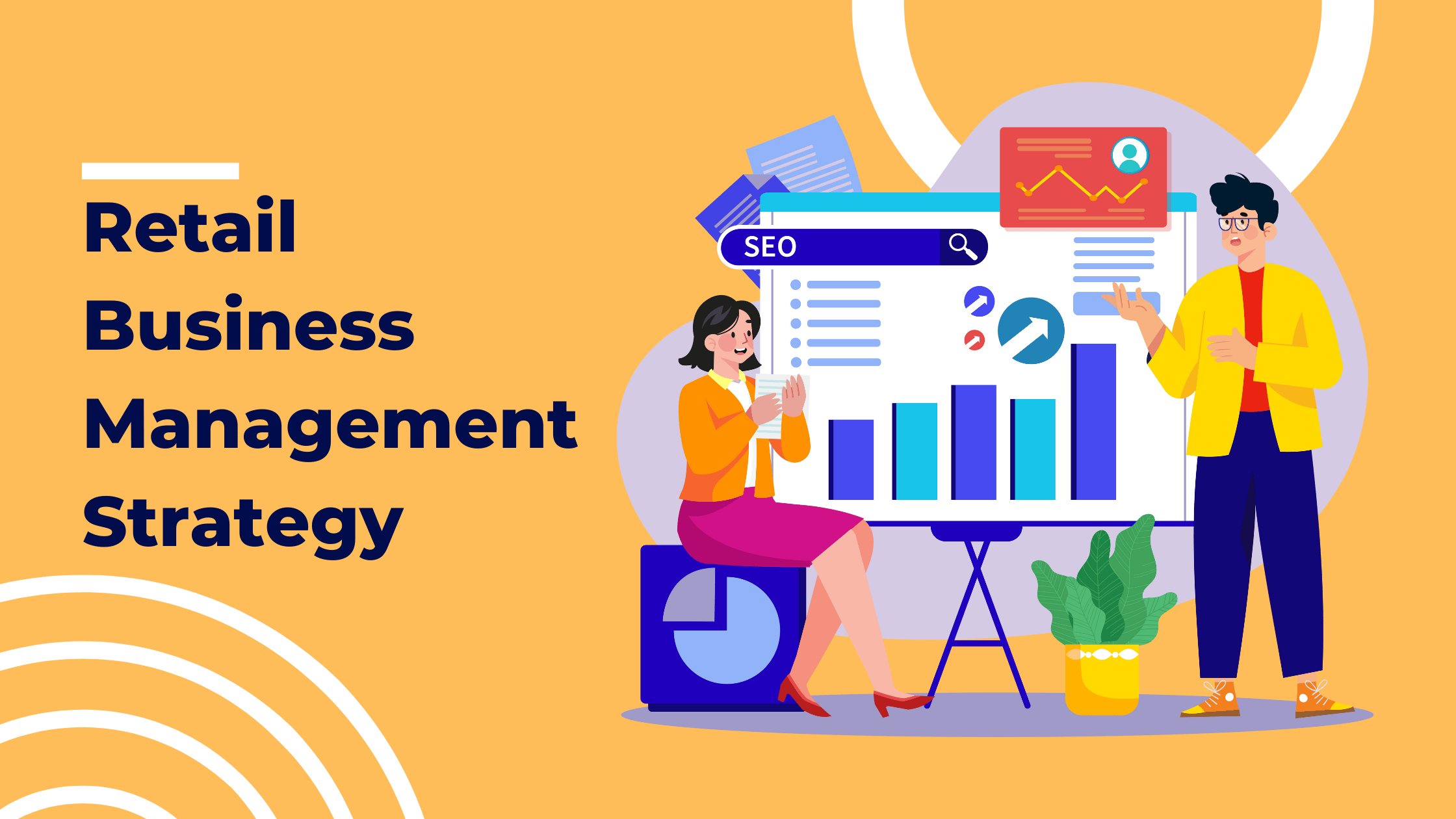
Retail Business Management Strategy: A smarter way to win in the new retail.

rentail business management strategy

Introduction

The current retailing is not about establishing a shop, putting the goods on shelves and waiting. Most retailers strive daily but fail to make good margins, have surplus stock, ineffective staff and uncertain growth. It is not the problem of effort but rather the lack of clear retail business management strategy.

The majority of the retail owners assume that the solution is to make more sales. The fact is that, sales without systems only add confusion. Rigorous retail business management approach is process-oriented, data and discipline-oriented so that the growth can be profitable and sustainable.

The blog approaches the retail management with a new perspective, dispels the old myths and presents smarter, system-based thinking- such as ideas inspired by the Six Sigma certification online in India and contemporary ERP/CRM practices.

What Is a Retail Business Management Strategy Today?

A retail business management strategy is not confined to day to day operations of a store. It is an organized strategy that brings people, processes, technology and customers together in line with the same outcomes.

The strategy in the contemporary retail would respond to the following questions:

What do we do to make sure that all stores or outlets are performing predictably? A clear retail business management approach transforms retail into a responsive business to a repeat business growth engine.

Retail Business Management Strategy Core Pillars.

The retail business management strategy is based on 3 pillars: Process discipline – Sales, inventory, billing and service SOPs. Customer-centric thinking – Decisions made by buyer behavior, not assumptions.

Retailers who develop on these pillars are more effective than the ones that use experience as the only basis. Strategy Retail Business Management vs Retail Operations. The store is operated by retail operations. The management strategy of retail business determines the direction of the business.

Operations are short-term. Strategy is long-term. Operations manage today. Strategy protects tomorrow.

Why Fail in Retail Business Management Strategies.

How to Fail in Retail Business Management Strategies. Most retail strategies are not complex they fail because they are not complete. Neglecting Process Optimization in Retail Strategy. The inefficiencies are considered to be normal by retailers. Profits silently are consumed by stock mismatches, billing errors, staff dependency as well as slow replenishment.

This is where the Six Sigma thinking comes in to play. It challenges retailers to:

Identify root causes

Reduce variation

Improve consistency

Even large volumes of sales do not bring stability without optimization of the processes.

Ineffective Visibility within Retail Management Systems.

The other significant area of failure is low data visibility. Decision making is made on guesses when inventory, sales, finance and customer data are present in silos. A contemporary retail enterprise management plan requires: Inventory and finance control ERP, Customer retention and loyalty CRM.

Step-by-Step Retail Business Management Strategy Guide.

This part is a practical how-to manual to the retailers.

Step 1 – Diagnose Retail Gaps through Strategy Frameworks.

Retailers need to have a clear view of problems before they can fix them. Start by identifying: Slow-moving and dead stock, Sales leakage points, Staff productivity gaps, Process delays. A mere diagnosis shows the areas where money is going down the drain every day.

Step 2 – Strategy of Retail Business Management with Customers.

The retail strategy is a failure when it does not take into account the customer behavior. Ask: Why do customers choose us? Why do they leave? What frustrates them? Pricing, store layout, service quality and product mix have to be in line with the manner in which customers actually purchase and not in the way that retailers believe they purchase.

Step 3- Develop Process Discipline with Retail Metrics.

When processes are standardized, retail success will go up significantly. Key actions include: Specifying SOPs of all the critical activities. Setting store-level KPIs Weekly performance review. This methodology reflects Six Sigma certification online teachings in India when applied in the retail setting.

Step 4 – Strengthen Retail Strategy with Technology.

Technology is not a cost- it is a control system. A sound business management approach of retail business employs: CRM to monitor customer history and recurrent purchases. Automation of manual errors.

Growth and Expansion Strategy of Retail Business Management.

Strategic growth will bring confusion. Systems without strategy are a dependency. Inventory and Supply Chain Control Retail Strategy. Inventory is opportunity and risk. The retail business management strategy is based on:

Demand forecasting Tracking of vendor performance. Optimization of stock turnover. This will eliminate overstocking and cash tie up. Dealer Network Strategy of Retail Business Management.

In the case of retailers who are growing by dealers or franchises, strategy guarantees:

Standardized processes Performance transparency Effective relationship management. Brand trust is created through consistency. Opinion: Retail Success Is More Process than Passion. A retail business begins with passion. Process sustains it. Why Passion is not Enough to Rescue Retail Businesses. Most zealous retailers do not succeed since their decisions are not strategic but emotional. Discounts replace planning. Effort replaces efficiency. The reason Why Retail Business Management Strategy Should Be Measurable.

Without being able to measure performance, it is impossible to improve it. Retailers must track:

Conversion rates Inventory turns Average billing value Customer repeat rate Retail Leaders Need to be System Builders. Effective retailers develop systems that operate without their presence. Such is the test of strategy. Trends in modern business management strategy of retail business. The retail strategy is changing at a fast rate. The way Indian Retail Is Becoming Smarter.

Key trends include:

ERP-led operations Process certifications Lean retail models Data-driven pricing Early adapters have a high competitive advantage among the retailers. Retail Business Management Strategy, Common Mistakes. Operating stores without dashboards. Ignoring staff training The Ways to prevent such Retail Strategy errors. Carry out periodic process audits. Invest in skill development Review strategy quarterly

Strategic Checklist of Retail Business Management.

Every retailer should have:

Clear SOPs

ERP and CRM integration

Defined KPIs

Frequent performance appraisals.

The attitude of constant improvement.

Summary

Retail Business Management Strategy Is a Long Game. Retail success does not happen by chance. It is engineered. The retailers are assisted by a powerful retail business management strategy: Control costs Enhance customer experience. Scale confidently Build long-term stability Process, systems, and skills oriented retailers perform better than those that are only interested in sales.

FAQ

What is the best retail business management strategy for small stores?

Begin with process transparency, inventory management and simple ERP systems.

What is the effect of the retail business management strategy in enhancing profitability?

Reducing waste, enhancing efficiency and making it more predictable.

Is Six Sigma applicable in managing strategy of retail business?

Yes

Why is technology important in the strategy of retail business management?

It offers scalability, control and visibility.

What is the frequency of reviewing a retail business management strategy?

At least once every quarter or when the market conditions vary.

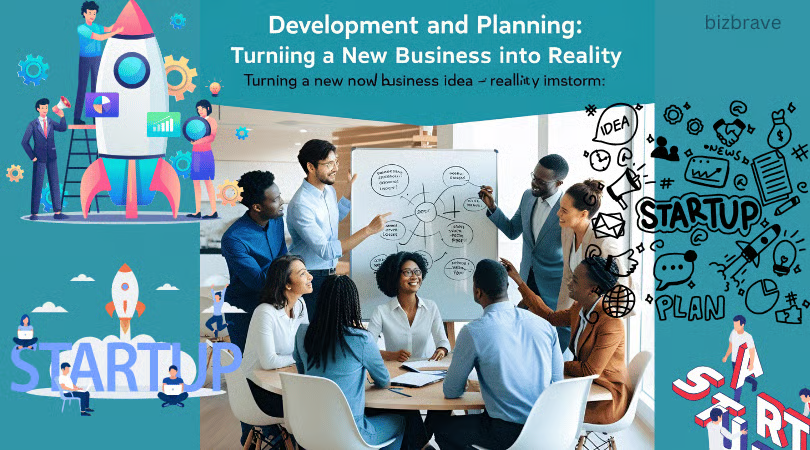
Concept Development and Planning: Turning a New Business Idea into Reality

Introduction

Launching a new business venture lasts beyond the excitement point because it includes significant challenges. Innovation alone fails to generate business profitability because few entrepreneurs successfully execute their innovative ideas into thriving operations. Drilling down to success requires concept development and strategic business planning executed correctly. The following article details the systematic approach to create a new business plan for SEO optimization which elevates Google and Bing search engine rankings. This article delivers market-ready business-building insights combined with expert advice about strategic plans to build sustainable businesses.

The core concept of business development operates as what developers call Concept Development.

Foundation in concept development stands as the essential element for constituting successful businesses. The business process begins by refining original concepts through market research while defining customer targets followed by business model construction.

Effective business concepts need to fulfill specific requirements that include fundamental question groups.

The main issue your business addresses

Who is your target audience?

Individuals need to understand how their product or service distinguishes itself from rival offerings.

What is the revenue model?

The business launch needs which resources along with the continuing needs to run operations?

Entrepreneurs who resolve these fundamental questions create excellent foundations that help businesses attract financial stakeholders and clientele.

Step-by-Step Guide to Developing a New Business Idea

A. Identify a Market Need or Problem

A business achieves maximum success when it finds solutions for genuine problems. Most newly-created businesses must first recognize an opportunity within the market. Conduct research to find out:

What are people struggling with?

Are there underserved markets?

The developing forces which influence how consumers behave present an essential question to consider.

Shop for high-demand business opportunities through market research instruments including Google Trends and social media monitoring platforms and competitor analysis.

B. Conduct Market Research and Competitor Analysis

The search engine ranking can improve by using headings that contain targeted keywords such as “How to Conduct Market Research for Your Business.”

Researching the market enables companies to comprehend their business environment. Key elements to analyze include:

The strategy requires determining which customer segment represents your main clientele.

The main competitors offer what positions need clarification.

Your audience search behavior becomes accessible through the combination of Google Keyword Planner, Ahrefs, and SEMrush.

C.Define Your Unique Value Proposition (UVP)

Your UVP needs both simplicity and memorability for customers to recall it.

D. Choose a Business Model

The selection of an appropriate business model stands essential for the achievement of profitability. Common business models include:

E-commerce: Selling products online.

Subscription-Based: Monthly or annual payment models.

Freemium: Free basic services with premium upgrades.

The business model of Service-Based operates through delivering professional expertise across consulting, coaching and freelance services.

Your business model must match industry concepts alongside customer market requirements.


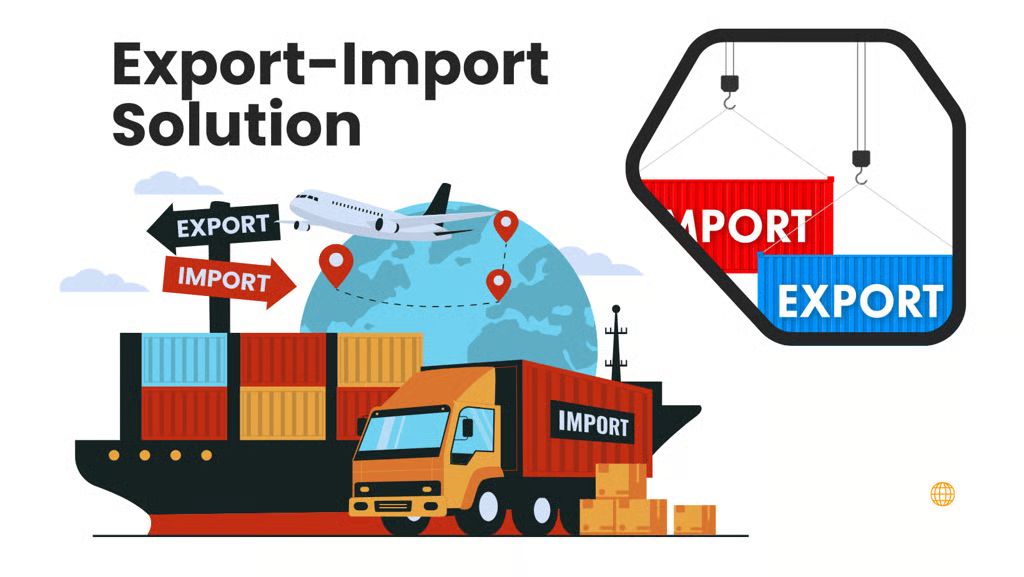
Global Import Export Business Guide 2026: Process, Challenges & Smart Solutions

Global Import and Export Solution

Introduction: Why Global Import and Export Solutions Matter Today

In this connected world, it is longer optional to grow outside local markets anymore – it was necessary. Businesses are now trying to find sustainable global solutions for import /export to tap in to the international audience and get good quality products with best value.

Whether you are an owner of a small business or a business owner of large enterprise, then you may realize unlimited growth opportunities if you know about global import export practices.

This Blog details what the global import and export solutions are, the benefits of the solution, and how a business can succeed in the global market.

1. What Are Global Import and Export Solutions?

Import and export solutions globally mean services, strategies, tools, and systems that facilitate establishment trading activities between countries effectively and legally.

These solutions include:

2. Why Global Import Export Solutions are Necessary for Businesses.

Key Benefits:

Market Expansion, sell to customers outside your borders.

Cost Savings – Procure raw materials or products at a reduced cost.

Diversification – Minimize risk by expanding the business to multiple markets.

Competitive Edge – Provide international products or conquer the world. Whether

you are exporting Indian textiles to the US or importing electronics from China, a right global import and export partner will help eliminate challenges that may arise.

3. Who Can Do Import and Export ?

Manufacturers wanting to sell abroad

Retailers bringing in exotic products

E-commerce sellers tapping world-market

Distributors dealing with foreign goods

Startups vetting the world market

Nowadays, trade is not limited only for big companies but can be practiced by each one. Just with the right support, small businesses can also become international players.

4. Steps to Start Your Import and Export Business

For the ones that are new to the global import and export world, here’s a short guide map:

Getting Started:

The product you are to identify – should be goods that have high demand and are easy to comply with.

Research markets for targeted customers/suppliers – Find countries likely to have them.

Create your business – get licenses, GST, IEC (Import Export Code) in India.

Search for Advertisement partners platforms such as Alibaba, IndiaMART and GlobalSource.

Select your model of shipping – air, sea, or courier according to volume and budget.

Learn about taxes as well as regulations Learn duties, limitations, and necessary documents.

Join forces with global import and export experts – and they will handle customs, logistics, paperwork.

5. The Top 3 Criteria I Use to Identify a Successful Global Import and Export Solution Provider.

A good partner can make or break you when it comes to international trade experience.

Look for: Experience with your industry

Global logistics network

Strong customer support

Compliance and documentation expertise

Affordable, transparent pricing For instance, in off the

Bizbrave Ventures you can find global import and export solutions that are specific to any business size and industry.

6. Services that are provided by Global Import and Export Solution Providers.

Logistics Management

Freight forwarding

Warehousing and packaging

Real-time tracking

Customs and Compliance

HS code classification

Duty and tax calculation

Preparation of the document (inv, packing, CoO)

Trade Finance Support Letter of Credit (LC)

Payment gateway integration

Currency conversion advice

Market Research and Advisory

Competitor analysis

Pricing strategy

Local laws and import restrictions

7. Popular Challenges in Global Trade (and Solutions)

Problems You May Face: Complex customs rules

Delayed shipments Currency fluctuations Fraudulent suppliers

How to Solve Them: Work with verified global partners

Automate tracking and updaes

Use safe international payments (PayPal, Escrow etc.).

Keep valuable knowledge running throughout all times.

8. Import and Export Documentation Checklist

Global trade boils down to a proper paperwork.

Here are key documents:

For Importers:

Purchase Order

Bill of Lading/Airway

Bill Invoice & Packing List

Import License (if required)

Insurance Certificate

For Exporters:

Commercial Invoice

Export License

Certificate of Origin (CoO)

Shipping Bill

Export Declaration Form

Errors on the documentation can cause delay, penalty, or seizure of shipment. Always double-check.

9. Choosing the Right Markets to Import and Export

Where to Export From India? USA (textiles, software, spices) UAE (machinery, gems, organic products) Germany (pharma, chemicals) Where to Import From: China (electronics, machinery) South Korea (automobile parts) Japan (technology products) How to Choose: Use Google Trends. Attend international trade fairs Study competitor markets

10. Tools and Software for Import and Export Business

Helpful Tools: ERP systems – in order to control stock and orders CRM – to automate customer relationship management; Shipping calculators – to calculate the price for freight and import duty. Digital signatures for the submission of online documents These tools ease manual work and facilitate operations’ scaling.

Final Thoughts: Introduction into Global Trade.

Global import and export solutions will open doors into international markets, improved suppliers and global presence. With the right partners and planning a small business is also able to go global. Don’t be fooled by complexity begin with expert assistance, use proper steps, and go global.

Strategic Business Management Explained: Meaning, Examples & Practical Benefits

strategic business management

Organizations are constantly under pressure to innovate, expand, and maintain profitability in the cutthroat business world of today. A key framework for assisting companies in overcoming these obstacles and achieving their long-term objectives is strategic business management, or SBM. The goal of this tutorial is to give a thorough overview of strategic business management, including its essential elements, advantages, and real-world applications.

Strategic Business Management: What Is It?

The methodical design, execution, and assessment of strategies to accomplish an organization’s goals is known as strategic business management. In order to carry out plans efficiently, it entails assessing both the internal and external environments, setting specific objectives, and coordinating resources. SBM places more emphasis on long-term growth and sustainability than operational management, which is more concerned with daily tasks.

Important Elements of Business Strategy Management

1. The mission and vision

A clear vision and mission statement are the foundation of any effective strategy. These components serve as a compass for all strategic activities, defining the organization’s mission and long-term goals.

The organization’s vision describes its future goals.

The mission statement outlines the organization’s present goals and strategy for realizing its vision.

2. Analysis of the Environment

Businesses can find opportunities, risks, strengths, and weaknesses by analyzing both their internal and external environments. Common uses for SWOT and PESTEL analysis tools include:

Analyze market patterns.

Recognize competitive environments.

Evaluate the organizational capacity.

3. Establishing Objectives

A roadmap for accomplishing the organization’s vision is provided by strategic goals. These objectives ought to be SMART:

Particular

Measurable

Reachable

Associated with

Time-sensitive

4. Developing a Strategy

This entails creating workable plans to accomplish predetermined objectives. Strategies may be stability-focused, growth-oriented, or designed to turn things around during difficult times. Market position, corporate priorities, and industry dynamics are some of the variables that affect the strategy.

5. Execution

A strategy’s effectiveness depends on how successfully it is carried out. Aligning resources, fostering cross-functional cooperation, and making sure all stakeholders are aware of their responsibilities are all necessary for implementation. During this stage, leadership and communication are essential.

6. Observation and Assessment

Continuous assessment guarantees that tactics stay applicable and efficient. KPIs, or key performance indicators, are used to monitor progress and make necessary corrections. Organizations can remain flexible and adaptable to changes by conducting regular evaluations.

Why is strategic management of businesses important?

1. Better Ability to Make Decisions

SBM offers a methodical framework for well-informed decision-making. Leaders can better deploy resources by comprehending internal capabilities and market circumstances.

2. Improved Alignment of Organizations

By ensuring that all departments strive toward common objectives, strategic management helps to break down organizational silos and promote a unified corporate culture.

3. A stronger edge over competitors

Businesses can maintain a competitive edge, adjust to changes, and stand out in the market with the support of a well-executed plan.


4. Growth That Is Sustainable

SBM encourages sustainability and resilience by concentrating on long-term goals, which helps businesses prosper even in unstable environments.

5. Reduction of Risk

Early risk identification through proactive planning and ongoing monitoring enables companies to create backup plans and reduce interruptions.

How to Put Strategic Business Management Into Practice

Step 1: Establish Your Goals and Vision

Start by outlining the long-term goals and purpose of your company. Involve stakeholders to guarantee support and alignment.

Step 2: Perform a thorough analysis

To obtain a thorough grasp of both external opportunities and threats as well as internal strengths and weaknesses, use tools such as Porter’s Five Forces, SWOT analysis, and PESTEL.

Step 3: Establish Strategic Objectives

Set SMART objectives that address the main takeaways from your analysis and are consistent with your vision.


Step 4: Create a Practical Plan

Select tactics that take use of your advantages while addressing your disadvantages. Think about:

1.market share.

2.creation of products.

3.strategic alliances.

4.Differentiation or cost leadership.

Step 5: Align and Communicate

Make certain that everyone involved is aware of their duties. Effective implementation requires training and clear communication.

Step 6: Carry Out and Observe

Put accountability and teamwork at the forefront of your strategy’s implementation. KPIs can be used to track progress and make necessary plan adjustments.

Typical Obstacles in Strategic Business Administration

Opposition to Change
Employee resistance to new tactics may stem from routine interruption or a fear of the unknown. Encourage an environment of open communication and include teams in the planning process to address this.

Insufficient Resources
Implementation may be hampered by a lack of technological, human, or financial resources. To optimize impact, prioritize projects and look for creative alternatives.

Inadequate Performance
Without adequate implementation, even the best strategies can backfire. To guarantee success, put an emphasis on accountability, leadership, and frequent progress reports.

Real-World Examples of Strategic Business Management

Quick changes in regulations, customer behavior, or technology may disrupt plans. Could you make sure your plan is flexible enough to adjust to these developments?
Examples of Strategic Business Management in the Real World

1. Apple Inc.

Apple’s emphasis on innovation and high-end branding is an excellent illustration of strategic company management. Apple has remained a leader in the business by continuously producing innovative products and building a devoted following of customers.

2. Amazon

Amazon’s approach is centered on operational effectiveness and customer-centricity. Through investments in technology, logistics, and customer service, the business has grown at an unprecedented rate.


3. The Tesla

The automotive industry has been upended by Tesla’s strategy emphasis on innovation and sustainability. Its focus on renewable energy and electric cars is in line with customer demands and worldwide trends.

conclusion

The foundation of any successful corporation is strategic business management. Businesses can attain sustainable growth and keep a competitive edge by concentrating on long-term objectives, evaluating internal and external factors, and efficiently allocating resources. A well-organized approach to strategic management can assist firms in navigating uncertainty and thriving in a changing business environment, even while problems are unavoidable.

The secret for companies embarking on a strategic journey is to maintain flexibility, give clear communication first priority, and cultivate a continual improvement culture. Strategic business management provides the resources and understanding required for any size business, from startups to multinational corporations.

Development and Planning of a New Business Idea: A Complete Guide 

The beginning of startup creation depends on a single concept that needs comprehensive strategic planning and unwavering dedication to achieve enterprise success. This guide presents the systematic development procedure for new business ideas through clearly explained instructions written in basic language. Reading this article will help both first-time business owners and project starters understand the steps needed to transform concepts into operational businesses. 

1. What Is a Business Idea? 

The establishment of any startup starts with developing a business idea. Programs function as remedies against market needs which present problems. A distinct practical yet useful business concept yields improved possibilities for business success.  

Examples of Business Ideas:  

Selling homemade organic snacks, Providing digital marketing services, An application for appointment scheduling development constitutes this business plan, Opening a coworking space. 

A new idea must address issues or customer requirements or deliver improved arrangements than what already exists in the market. 

2. Finding excellent business concepts originates from what source?  
 

A few steps exist to help you generate business ideas.  

Identify Problems Look around you. What are people struggling with? Your idea possesses potential to streamline processes within their lives.  

Follow Your Passion People can develop successful businesses by pursuing their cooking abilities photography skills or fitness capabilities.  

Watch Market Trends Business-related blogs and startup news along with online trending information provide good indicators if you want to generate new ideas. Minor interest focuses should incorporate ongoing data about emerging technologies together with life pattern changes and changing customer behavior patterns.  

Customer Feedback The existing customers and followers can provide feedback about desired products and services through your direct inquiry. 

3. Validate Your Business Idea  
 

Investment of time and money requires a validated business concept. This step is very important.  

Ask These Questions:  

Do customers genuinely need my business offerings?  

Who are my target customers? Who are my competitors? 

Ways to Validate:  

Do online surveys or interviews Start a small pilot project A restricted version of the product should be released for customer response evaluation. Establish a landing page that allows you to measure prospective client reaction 

4. Do Market Research  

Your market research enables you to grasp the specifics of your business sector while learning about your customers alongside their main competitors.  

Research Topics:  

Size of the market  

Customer needs and preferences  

Pricing trends  

Gaps in the market  

Competitor strategies 

Your insights will become clearer by utilizing the combination of Google Trends and forums accompanied by industry blogs and social media platforms. 

5. Define Your Target Audience  

You cannot sell to everyone. The process of defining your main audience enables you to create smarter marketing choices as well as pricing along with branding strategies. 

Define Based On:  

Age group ,Gender Location ,Occupation ,Interests ,Income level 

Example: Your intended buyers consist of fitness-conscious individuals belonging to the 25–40 age range who work as professionals in urban settings. 

6. Basic Components  

Executive Summary ,Business Description ,Market Analysis ,Marketing Strategy, Product/Service Details ,Operations Plan ,Financial Plan. 

7. Choose a Business Model 

Common Models:  

Selling products (physical or digital)  

Subscription model  

Freemium + premium services  

Commission-based model  

Service-based billing (per hour or project)  

Select the business model which matches both your product requirements and suits your audience alongside meeting your market conditions needs.  
 

8. Plan Your Finances 

Financial planning reveals the required financial Amount for starting and sustaining your business operations. 

Things to Calculate:  

Startup costs (equipment, licenses, marketing)  

Monthly expenses (rent, salaries, internet)  

Revenue goals (monthly and yearly) 

Build a basic expense planning spreadsheet to predict revenue outcomes.  

Your fitness meal plan target customers consist of health-minded professionals between 25 to 40 years old who reside in urban settings. 

9. Your first step should involve selecting a business name along with registering your enterprise. 

Select a business name which functions well for recall but highlights your product offerings along with being available for use. 

Steps to Take:  

Check domain name availability Check for trademark conflicts  

Sign up your business at government authority offices  

Get necessary licenses or permits  
 

10. Build Your Brand 

Branding exists as the essential method that enables customers to understand your business and develop connections with it. 

Branding Elements:  

Logo  

Colors and fonts  

Tagline  

Website and social media presence  

Consistent messaging and tone 

Good branding establish trust and make your business more distinguishable in the market. 

11. Set Up Your Online Presence 

The modern world demands every business needs a digital foundation.  
 

Start With: 

Professional website (with mobile-friendly design)  

Google Business Profile  

Social media pages (Facebook, Instagram, LinkedIn, etc.)  

Email for business (yourname@yourbusiness.com

Tips – all contact details & service descriptions remain easily visible to customers.  
 

12. Develop a Marketing Plan  

Through marketing efforts you will draw customers toward your business. Make a precise outline for advertising your products and services to customers. 

Marketing Strategies: 

Content marketing (blogs, videos, guides)  

Social media marketing  

Email marketing  

Google Ads or Facebook Ads  

Local advertising (flyers, events, newspapers) 

Follow up on your marketing strategies so you can determine which ones give best results. 

13. Build a Team (If Needed) 

Your business needs more than a single person to operate so you will require building a team.  
 

Key Roles May Include: 

Co-founder or business partner  

Marketing specialist  

Sales representative  

Accountant Customer support 

Recruit employees who understand your mission while possessing capabilities different from your own.  
 

14. Launch Your Business 

You have finished your preparation for business launch so proceed with the implementation!  
 

Launch Tips: 

Promote your business launch through social networks together with distribution through email subscriber lists.  
 

First-time customers will be attracted through promotional deals and discounts.  
 

Gather testimonials and feedback 

Continue promoting actively  
 

A launch marks the start of an endless journey ahead despite being the first step.  

15. Monitor, Learn, and Improve 

Your business launch begins service improvements to your product alongside betterment of your customer experience.  
 

Keep Doing: 

Collect customer feedback  

Analyze sales and website data  

Make changes based on performance 

Success doesn’t happen overnight. Your continuous improvement and ongoing education and dedication toward progress will lead to transformational changes. 

New business ideas require initial overwhelming feelings yet proper step-based planning gives you confidence to progress through the process.  

  • Quick Checklist Recap: Obtaining a new business concept remains the initial step.  
  • Validate it with real feedback  
  • Do market research 
  • Write a simple business plan  
  • Pick your business model  
  • Budget your finances First register your business after choosing its official name.  
  • Create your brand identity  
  • Set up online presence  
  • Develop marketing strategy  

Launch and improve All major corporations evolved from a single smaller concept. The main thing is to create plans for execution and development. Each day brings future business opportunity so those who want to start their own company should move forward with immediate action because future success begins right now.