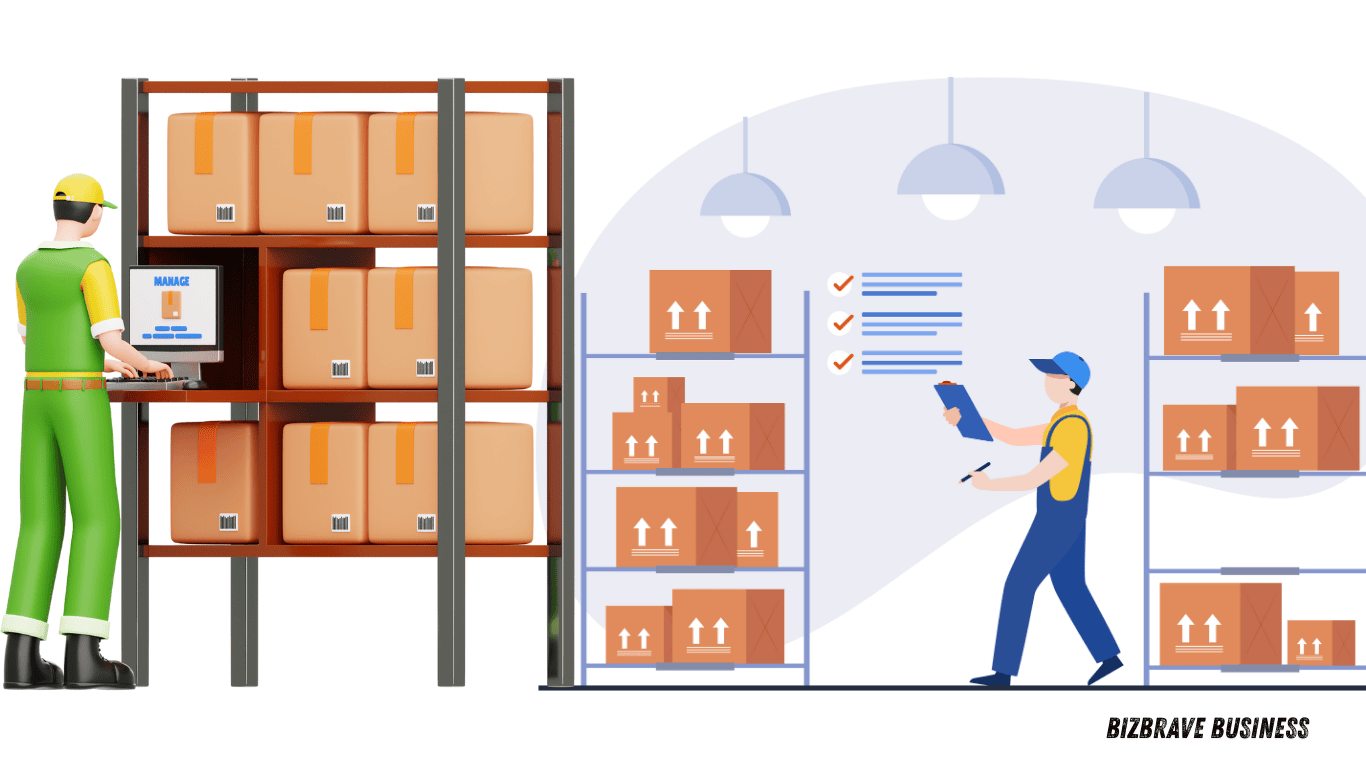

7 Inventory Forecasting Methods Every Business Owner Should Know.

Inventory Forecasting Methods

Problems with inventory do not present themselves at an early stage.

They simply manifest themselves in the form of blocked cash, late deliveries, dissatisfied customers, or warehouses with products that move slowly.

These challenges are not present in most business owners who are not working hard- but because they are not doing proper Inventory Forecasting.

Forecasting inventory has ceased to be a big company strategy. Emerging and expanding businesses today have to smartly forecast demand in order to survive and grow. Today us in this article we are going to dissect the most workable Inventory Forecasting Methods any business owner ought to understand explained in easy language and real life situation. Inventory planning, manufacturing, distribution, or retail: The techniques will assist you to make wiser inventory choices, confidently.

What is Inventory Forecasting?

Forecasting inventory refers to the process of determining the future inventory needs using the past information, demand trend, market scenario, and market intelligence. In simple terms, it aids you in making a decision on what to stock, the quantity to stock and when to stock.

Most companies do not distinguish between forecasting and guesswork. The business of forecasting does not rely on assumptions but informed estimation. Effective inventory forecasting enables organizations to strike a balance between customer demand and organization efficiency. Properly performed, it will make sure that the products are ready when the customers require them and it will not tie up unnecessary cash in out of stock items.

Fundamentally, inventory forecasting unites sales, purchasing, warehousing and finance into a single decision-making process.

The importance of Inventory Forecasting to Business development.

Inventory is cash lying on your shelves. Excessive inventory paralyzes cash flow. Scarcity of inventory will result in lost sales and dissatisfied customers. Inventory forecasting will assist you to remain in the balance figure. Forecasting is even more significant in the case of growing businesses.

Unforeseen expansion is usually a mess, as companies might buy too much at times of expansion or not enough at times of demand. Proper inventory forecasting leads to better planning, ease of operations and improved margins. Those businesses which employ inventory forecasting early enjoy a superior control over the suppliers relationship, production and schedule as well as customer commitments. Forecasting is no longer a choice in competitive markets, but a strategic asset.

Major Factors which influence the accuracy of inventory forecasting.

There is no single factor that is used in inventory forecasting. There are several factors that affect accuracy and knowledge of the factors enhances the quality of decisions made.

Past sales data is a key factor because past demand is usually the predictor of future demand. Nonetheless, statistics are not sufficient.

Seasonal, supplier lead time, promotions, price variations, and market trends should also be put into consideration.

Demand can be greatly affected by external forces like economic status, the activities of competitors and fluctuations of customer preferences. On the inside, low quality data or inconsistent reviewing can decrease the level of accuracy of the forecast. The most effective inventory forecasting is the result of data and business experience, rather than spreadsheet programs.

Inventory Forecasting Techniques All Business owners would want to know.

No one best method of forecasting approaches exists. The correct strategy will be based on the size of your business, the type of products, and the volatility of demand. These are the most widely employed Inventory Forecasting Methods as explained practically below.

History Sales Forecasting.

Historical sales forecasting involves the use of historical sales data to come up with future demand. It presupposes that the sales that will happen in the future will be similar to the past. It is one of the most popular and simple approaches. It is effective in companies where demand is always constant and recurrent consumers.

Regular products are often forecasted using the past to predict future sales through the retailers, wholesalers and distributors. Nonetheless, such an approach will not be effective in cases where the market environment is dynamic or the introduction of new products. To be in line with reality, historical sales forecasting should be revisited on a regular basis.

Trend-Based Forecasting

Trend based forecasting is more concerned with the patterns of demand which are either increasing or decreasing. It does not just consider the previous year figures but it evaluates whether the demand is steadily increasing or decreasing. This is applicable to a business with growth or expansion.

It assists in making modifications in the inventory level ahead of time instead of responding in time. Nevertheless, trends evolve rapidly, particularly in industries that develop rapidly. Trend forecasting is most effective when market awareness and frequent updates of data are involved.

Seasonal Inventory Forecasting.

Seasonal forecasting considers the regular demand trends that are based on certain occasions of the year. Seasonal demand is affected by festivals, holidays, change of weather and annual purchasing cycles. The retail, apparel, FMCG, and consumer goods companies cannot do without this approach.

Seasonal forecasting enables the business to stock to anticipate the peak demand without coming up with surplus inventory once the event is over. One of the most predominant inventory forecasting errors that are committed by expanding businesses is failure to consider seasonality.

Moving Average Forecasting

Moving average forecasting eliminates peaks and declines in the sales in the short run by averaging the sales in a given period of time. It is more predictable in its demand estimate as opposed to the spikes and drops which are sudden.

The approach is applicable to a business with high frequency of change in demand but prefers to have a straightforward forecasting model. Although easy to compute the moving averages are likely to be slow in reflecting the fast changing markets. It is more fitting in short term planning as opposed to long term strategic forecasting.

Inventory Forecasting on Demand.

Demand-based forecasting emphasizes on the real customer demand information instead of historical sales. It involves sales orders, inquiries, point of sale information and customer behavior as used to forecast the future needs. This process brings the inventory planning near the actual demand in the market.

It is more dynamic and precise, particularly where the customer orders of the business vary. Demand-based forecasting must be supplemented by effective data collection systems and frequent monitoring in order to be effective.

Qualitative Forecasting (Expert Judgment)

Qualitative forecasting is based on experience, intuition, and market knowledge as opposed to the use of numerical data. It is mostly applied where limited or no historical data is available. The approach is especially applicable to the new product introduction, niche markets or the industries that are changing fast.

Although the expert judgment will provide some useful information, a pure intuition may cause bias. An amalgamated approach to data-driven forecasting and qualitative understanding is the most successful one.

ABC Analysis Based Forecasting.

ABC analysis divides inventory items into value and impacted ones. A, B and C items represent high value products, moderate, and low value high volume. Forecasting activities are more oriented to A items where the accuracy is the most important consideration.

The approach assists companies to focus resources and attention effectively. ABC-based forecasting is very useful when dealing with a big size of products and less planning ability of the business.

Inventory Forecasting: Unlike in other forecasting types, forecasting based on software is non-probability.

Forecasting is calculated by software programs that involve the use of inventory control or the ERP software. These systems are able to analyze large data sets, patterns and make correct predictions in real time.
Automation eliminates human mistakes and enhances uniformity.

It also facilitates scenario planning, quicker information, and improved coordination of the departments. Inventory forecasting Software is usually the most reliable and sustainable method that can be used to scale businesses.

Automated vs. Manual Inventory Forecasting.

Spreadsheet based manual forecasting is applicable to the initial businesses that have few products and are not facing fluctuating demand. It is flexible, and needs to be disciplined and updated on a routine basis. Manual systems are very prone to errors and time consuming as businesses expand.

Automated forecasting systems are accurate, fast and scaleable. They combine sales, purchasing, and inventory statistics in one perspective. The decision on whether to have manual or automated forecasting will be based on the size of business, complexity and growth objectives.

The most common inventory forecasting errors.

There are numerous issues in the inventory that do not use the tools, but the mistakes. It is common to make mistakes based on the information of the last month and not factor in supplier lead times and over estimate demand on the basis of optimism.

The other significant error is not to review forecasts on a regular basis. Forecasting cannot be a one time affair it must be continually improved. These are some of the mistakes that should be avoided because they can greatly enhance inventory performance with no extra investment.

Selection of an Appropriate Inventory Forecasting.

The correct forecasting technique is based on the business scenario. Constant businesses will be an advantage with the help of historical forecasting, whereas growing businesses require trend and demand-based approaches.

Companies that have seasonal demand should focus on seasonal forecasting, whereas complex operations apply to software-based solutions. One does not have to embrace everything at once.

The way ERP will be useful in enhancing the accuracy of inventory forecasting.

ERP systems consolidate business information and offer real time accessibility to all business activities. They bridge the sales, inventory and purchasing and remove data silos to enhance accuracy of the forecast. ERP allows the business to make forecasts automatically, monitor the real performance, and manipulate plans fast. The result is improved purchasing, lower inventory and higher customer satisfaction. Forecasting is supported by ERP and helps in long-term growth as it allows scalable and decision-driven decision-making based on data.

All About Inventory Management Software

Best practices in Effective Inventory Forecasting.

Proper forecasting of inventory must be consistent. Make regular forecasts, mix forecasting techniques and compare forecasts to actual outcomes. Keep safety stock not in her heart but in her head. Continue to forecast in line with business interests, not merely requirements. Minor advances in the accuracy of forecasting can result in an enormous increase in cash flow and efficiency.

Conclusions: Inventory Forecasting is a Business Science.

Inventory forecasting is not an action but a business science. It affects the cash flow, customer confidence, and future development. Owners of businesses who take inventory forecasting seriously make sound decisions as a matter of fact. You do not need flawless predictions you need improved predictions than last year. Keep things simple, remain consistent and develop steadily. The process of inventory forecasting is an investment and each step you take will solidify your business.

Frequently Asked Questions (FAQs).

Which inventory forecasting technique is the most useful in the case of small business?

To begin with, small businesses need to begin with historical sales forecasting and slowly transition to the use of demand-based or software-driven techniques as they expand.

What frequency do we expect inventory forecasting to be?

Forecasting is expected to be checked every month at least and more often in case of rapid moving products or seasonal products.

Is it possible to forecast inventory using Excel?

Indeed, the simple use of Excel is acceptable in simple forecasting, but automation is needed with complexity.

What is the role of inventory forecasting in enhancing the cash flow?

It helps in avoiding excessive inventory and unwarranted investment in inventory, which leaves the working capital free.

Are ERP systems inventory forecasting?

Yes, the new ERP solutions have sophisticated inventory forecasting and planning solutions.

FIFO vs LIFO Inventory Method: Which One Is Better for Your Business in 2026?

FIFO vs LIFO

While study Inventory methods On the one hand, inventory management decisions are not very dramatic, and on the other, they determine how you make profits, taxes, and cash flows.

A very neglected decision that business owners engage in is the choice of inventory methods of FIFO or LIFO. Both appear to be mere accounting principles on paper. The truth is that the decision to use the wrong inventory technique will misrepresent your profit statements, over-value your tax due and give you an incorrect pricing strategy.

I have witnessed businesses expanding in terms of sales and not being able to rest on cash since their inventory valuation was not that of reality. When you have to work with stock, be it selling the products, producing the goods, or trading commodities, it is not a free choice whether to know about FIFO vs LIFO. It is a tactical move that immediately determines the state of the health of your business.

What Is FIFO?

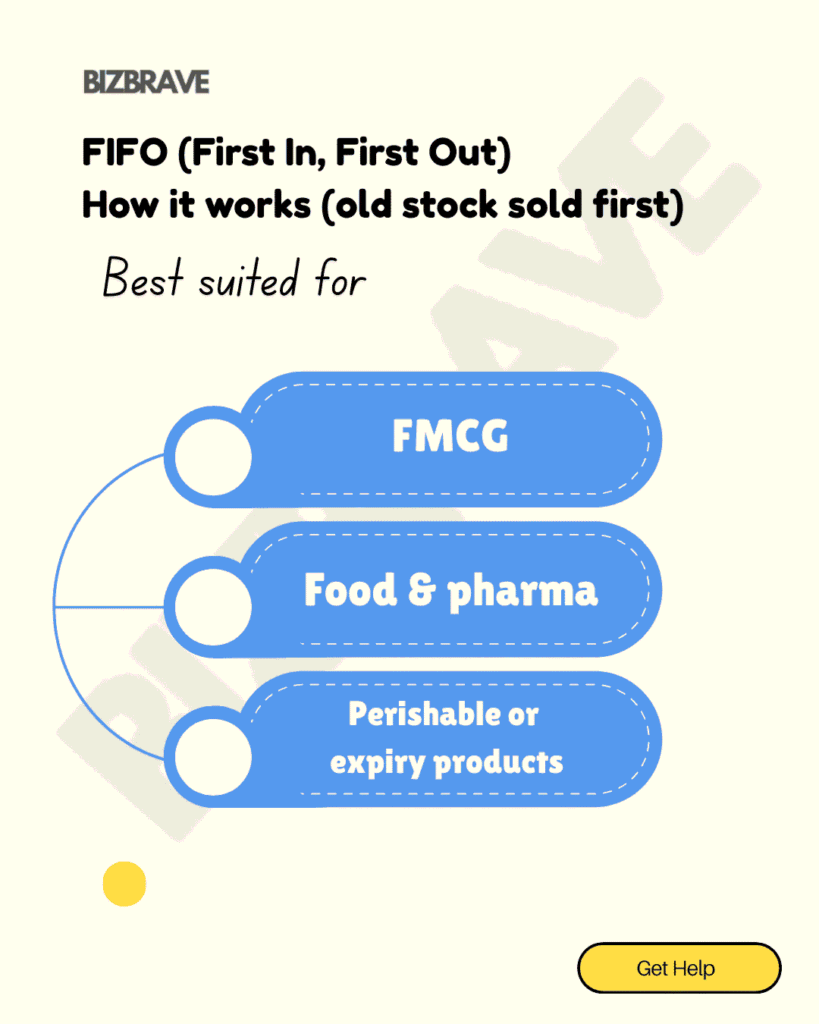
FIFO or First In First Out is an inventory accounting technique in which the cost of oldest purchased or produced goods is charged at the moment it is sold in the first stage, with the newest inventory kept in the stock.

FIFO in a very basic definition presupposes that the very first thing you purchase or produce is also sold first, regardless of the physical locations of the items. This mode is very similar to the business practices in the real world, particularly of products that have a short shelf life, a high turn over or whose trends keep on changing.

What Is FIFO?

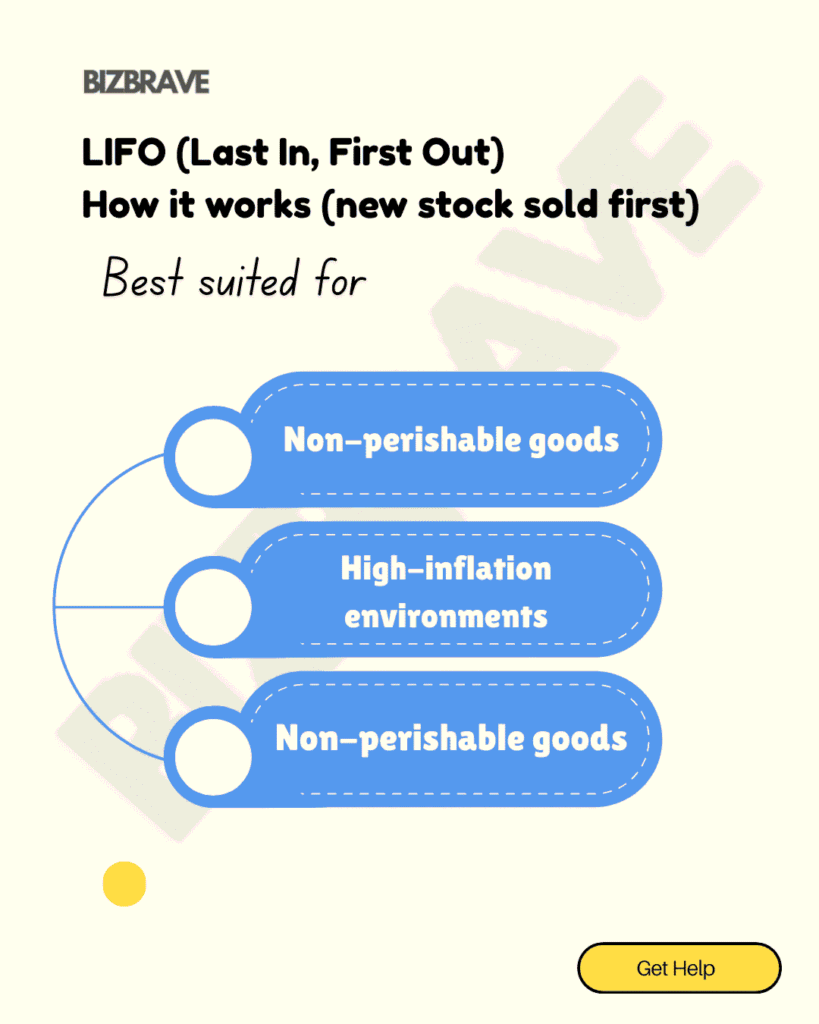
LIFO also known as Last In First Out, is an accounting approach of inventory accounting in which the cost of last purchased or produced goods is noted as sold first with the old inventory costs kept in stock. This implies that the current sales are contrasted with the latest costs which can decrease the reported profits at the times of increasing prices and allow to control a tax liability at available opportunities.

The LIFO method is primarily applied in price volatile goods or bulk goods based industries, and fails to represent the flow of goods in reality, and tends to under-value the closing inventory.

The Hidden Inventory Issue that most of the businesses pay no attention to(FIFO vs LIFO).

Majority of business owners are concerned with sales, marketing, and operations. The accounting of inventory is normally only given attention when audits, GST or stock mismatches are observed. That is the point where it begins to go wrong.

Frequently, it is not a sales problem, but the cost recording of inventory. Your inventory approach determines which cost is going to be reflected in your profit and loss statement when purchase prices vary. Unless you are mindful of whether to use FIFO or LIFO, then your financial statements are probably providing you with half-truths.

This gap increases as the businesses expand. Manual tracking, assumptions and outdated methods can work on small scale, but silently fail once volumes, suppliers and SKUs grow.

Reality Check: FIFO and LIFO Do Not Move Your Stock: FIFO vs LIFO Move Your Numbers.

We should get out of a great fallacy. FIFO and LIFO do not determine whether a certain physical product becomes the first to leave your warehouse. They merely make a decision on what cost is carried to be sold.

FIFO (First In, First Out) presupposes to sell the oldest inventory first. LIFO (Last In, First out) works on the assumption that the latest inventory is sold out first. The impact of this difference on the three areas of importance directly are Cost of Goods Sold (COGS), closing stock value and taxable profit.

It is the right decision based on the industry you are in, inflation direction, regulatory regulations and long-term business perspective.Companies that consider inventory accounting as a commodity accountancy overlook its strategic importance.

The Concept of FIFO Understanding: When Simplicity and Reality Agree.

The most popular inventory system all over the world is FIFO. Under the FIFO, your oldest stock would be used as sold first, and newer inventories are held in closing inventory.

Physical stock movement is inherently reflected by FIFO when the goods of the business are perishable, expiry sensitive or fast moving consumer goods. It eliminates the stagnant stocks lying around and offers the inventory value a closer estimation.

Financially, FIFO tends to record greater profitability in a period of inflation due to the match of old and low costs with the current selling prices.

The reason why many business owners are fond of FIFO is it is simpler to comprehend, simpler to explain to auditors, and is widely accepted by accounting standards in most nations such as India.

However, FIFO is not perfect. In times of cost inflation, reported strength may not be cash strong. Later many businesses that fail to plan this tax tend to have pressure.

LIFO: Knowledge of LIFO as a Strategic butlimited Practice.

LIFO operates just the reverse. It presupposes that the last bought inventory is sold, and old items remain in the records of the inventory.

Cost matching is the major attraction to LIFO. Newer costs are more expensive during inflation and thus the profits are seen to be low enough to pay lower taxes.This will help in sustaining cash flow in certain scenarios particularly in business involving commodities or goods exhibiting price volatility.

Nonetheless, there are significant limitations of LIFO. It is prohibited in a lot of accounting regulations, such as the Indian accounting and IFRS. It may severely understate closing stock on the balance sheet even where permitted, providing an untrue idea of the health in business. In the long run, the inventory records could consist of very old costs which are no longer reflective of the reality.

This is why LIFO, though appealing in theory, will be impractical to most businesses.

FIFO vs LIFO: Which Businesses need to select what?

There is no question of what appears better on the paper, FIFO or LIFO. It is a matter of being on par with the way your business works.

FIFO is mostly more appropriate in enterprises that handle perishables, retail products, FMCG, pharmaceutical products, and electronic products, as well as on any business where the freshness of stock is important. It brings out transparency, conformity, and purer financial statements.

LIFO, when legalized, can be advantageous to businesses that deal in large quantities of commodities or materials whose prices are often likely to fluctuate and where tax efficiency is of major priority.

The actual error made by the businesses is adopting an approach and never coming back to it. Markets change. Inflation changes. Your business scale changes. The inventory practices need to change.

A Personal observation of working in the growing businesses.

One pattern that I have observed over the years is the following. It is not a misfortune to businesses that they either use FIFO or LIFO, it is that they have not investigated the effect of their decision(FIFO vs LIFO).

Most of the expanding businesses are still maintaining manual inventory records or being on simple spreadsheets not knowing the impact of inventory appraisal on the pricing, profit and cash planning. As companies spread in various locations or mediums, there is a rise in the complexity of inventory and a multiplication of incorrect assumptions.

Inventory accounting must not baffle the business, but help business decisions.When your methods of inventory correspond with your operations and financial objectives, then your reports become instruments–not paperwork.

Takeaways: The key to the correct inventory method FIFO vs LIFO.

The initial process is to know your nature of products. When you have goods that are of a perishable nature, degradable or those whose lifespan is very short, then FIFO is often the best, and more practical choice.

The fact that inventory accounting is matched with physical flow helps to minimize the errors and surprises. Second, have your inventory procedure on a yearly basis. A strategy that proved effective in a low price environment can damage profitability in a high price market.

Just as in pricing strategy, inventory strategy needs to be reviewed. Third, you should not use manual inventory tracking as your business expands. The mistakes do not manifest themselves in the short term, but they accumulate. Lack of consistency in data will cause erroneous judgments particularly in pricing and buying.

When your cost information is either obsolete or misleading, then the sale price will appear profitable when it is really decreasing margins.

Lastly, the last thing to remember is never change inventory methods without knowing about tax and compliance. Even a minor accounting modification may present a long-term reporting and audit problem unless planned adequately.

Why Inventory Method is a Strategic Choice and not an Accounting Process.

Inventory is in the crossroad between operations, finance, and strategy.

Under conditions that inventory valuation corresponds to business reality, decision-making will be more apparent: buying to pricing to expansion.

Good companies do not sell more. They know their figures very well. When properly implemented, inventory accounting turns into a mute strength.

Frequently Asked Questions (FAQs)

How does FIFO and LIFO differ as methods of inventory?

The primary difference is in the recording of the inventory costs. FIFO presumes that the stock is sold out in terms of its age with the oldest being sold first and LIFO presumes that the stock is sold out in terms of its age with the latest one being sold first. This has an impact on profit, taxes and valuation of inventory- but not the actual motion of stock.

Is LIFO allowed in India?

No. LIFO is not allowed under both Indian accounting standards and IFRS. FIFO and weighted average compliance and reporting are common in most Indian businesses.

What inventory method will lower the tax liability?

In the case of inflation, LIFO may decrease the taxable profit since the costs that were incurred in the recent years can be balanced against sales. LIFO however is limited in most parts so FIFO is the best to use by most businesses.

Is it possible to alter inventory approach later in a business?

Altering inventory practices affects financial statements, tax statements and compliance. Vocational advice is highly encouraged prior to a change.

Is FIFO superior to small businesses?

In most cases, yes. FIFO is simpler to comprehend, generally embraced and consistent with actual stock flow. It offers a cleaner reporting of finances and reduced compliance issues in the growing businesses.

Final Thought

Inventory amount of money on shelves.The way you quantify it determines the prudence of your progress. FIFO or LIFO does not deal with the preference of accounting- it is about business clarity.When the inventory approach that you use justifies the reality, your judgments are more effective, less complicated and more assured.

Small Business Inventory Management. A Practical, Real-World Guide for Sustainable Growth

Small Business Inventory Management

The time I was exploring the food business of my friend. Inventory management is one of the areas where I see his business losing money. also my study in small business owners they are silently losing money, peace of mind and chances of growth. It is not due to their carelessness it because of inventory is seen as a back office activity, it is not seen as a growth driver.

As a professional who has worked closely with developing businesses, retailers, manufacturers and distributors over the years, I have realized one universal fact: The reason why businesses do not work is not because they do not make sales; they do not work because of poor inventory control.

This small business inventory management guide has been authored in a way that allows you to think in a straightforward manner, take necessary actions and develop systems that can sustain the growth without making life complicated.

What Is Small Business Inventory Management? (In Simple Terms)

Small business inventory management refers to tracking, controlling and planning stocks such that you would always have:

The right product, In the right quantity, At the right time And not without holding money needlessly.

Small Business Inventory Management does not simply consist of goods lying in shelves. It is your current assets, your promise to customers and your future income. It becomes smooth when inventory is taken care of. When it is not it is all stressful.

The reasons as to why Small Business Inventory Management becomes a challenge.

Majority of small businesses do not begin in bad intentions. They begin with either manual systems, simple registers or Excel sheets – and that is fine at first. The issue begins when the business expands, and so does not the system.

1. No Clear Visibility of Stock Many owners don’t know: What’s selling fast What’s lying unsold What needs to be reordered The decisions are made without consulting data.

2. Slow Moving Inventory Cash Stuck. This is considered to be one of the largest silent murderers of small businesses. Money that would be allocated to marketing, employees or growth is held up in non-moving products.

3. Stockouts Which Kill Customer Trust. Being out of fast-moving products implies: Lost sales Lost customers Damaged reputation There is hardly ever a complaint made by the customers, they simply do not come back.

Why Small Business Inventory Management Is a critical Growth in Small Business.

Small Business Inventory Management is not the problem of control, it is the matter of freedom.

Better Cash Flow Cash remains in circulation when you only buy on the basis of what you sell. A good cash flow will make you confident in making intelligent business choices. Better Customer Satisfaction. Trust develops automatically when customers receive what they desire, at the time they desire it. Smarter Planning By having the right inventory data, you will be able to: Forecast demand Plan promotions Diversify lines of products.

The Inventory that every Small Business ought to keep.

There is no standard set of inventory requirements in every business, but there must be certain clarity.

Raw Materials Inventory Significant to industrialists and employees. Tracking deficiency in this case results in production wastages and delays.

Work-in-Progress Inventory This is overlooked, yet very significant. Follow-up of WIP assists in minimizing the waiting time and enhancing the delivery schedules.

Finished Goods Inventory This is what customers see. Mishandling, in this case, has a direct influence on sales and reputation.

Small Business Inventory Management Process in Detail.

Step 1: list out all product you have and Classify All Products (important in inventory control

Clarity is the key in all inventory management. Unless you well understand what products you possess and their manner of behavior, you will never be straight even how hard you strive to be.

The initial and the most effective is to make a whole list of products and to classify them appropriately.Begin by preparing a simple list of all products which you transact. You don’t need a fancy system. One only requires a sheet with the name of the product, the price of purchase, selling, and quantity.

After a list is prepared, classify all the products under the following four groups:

Fast-Moving Products

Fast moving products refer to products that sell regularly- daily or weekly. These are those products that customers are frequently requesting, and hoping that you will be carrying.

These products are your bread-winners.Sales cease immediately in the event of out of stocks of fast-moving products. There is no waiting, the customers just switch to a different seller.

This is why fast moving products require:

• Continuous tracking

• Adequate stock at all times

• Priority during reordering

It is not that many businesses fail due to low demand, rather, they fail to provide the fast moving goods because they never plan on it.

Slow-Moving Products

Slow moving products are sold at times.

These products:

• Occupy storage space

• Lock working capital

Ignoring the slow-moving stock is the greatest thing that business owners commit since it could be sold someday. As a matter of fact, slow-moving inventory should be tightly controlled. Once identified, you should:

• Reduce purchase quantity

• Stop repeat buying

• Develop clearance or bundling deals.

The cash tied in slow-moving inventory is the cash that cannot be utilized to grow the company.

Seasonal Products

When seasons are changing, festivals or special events, seasonal products are able to sell only at the time. These products are capable of earning a lot of profit within a short period although they are very risky in case of poor planning.

• Advance demand planning

• Timely purchasing

• Evident post-season exit strategy.

Remaining stock at the close of season will directly decrease profit. Here planning is what differentiates serious businesses and immediate ones.

High-Value Products

Products that are high-value are those products possessing higher purchase price and risk. The slightest slip in dealing with or on-stocking them results in big losses.

These products need:

• Individual tracking

• Limited stock holding

• Depiction of the responsibility.

small business inventory management based on high value must never be overstocked in case. It is better to control rather than to be in quantity.

Step 2: Minimal Stock and Reorder levels.

Waiting to complete a stock then order is one of the largest inventory errors. Minimum Stock Level This is the safety level that you must always keep as a reserve so that your sales do not go into halt. It cushions your company against unexpected demand or delays of suppliers. Reorder Point And this is where you must make a new order, not when the stock is exhausted. Defining these two levels:

• Prevents panic buying

• Eschews increased costs of emergency.

• Keeps operations smooth Planned

purchasing is always economical as compared to the urgent purchases.

Step 3: Track Inventory

The discipline of inventory tracking is not perfection. Daily or weekly tracking:

• Builds awareness

• Enhances employee responsibility.

• Reduces surprises Simplest tracking

techniques will work provided taken regularly. Frequent exposure will enable you to fix minor problems before they grow to be major problems.

Step 4: Conduct stock/Stock Audit.

Stock audits have nothing to do with blame; business protection is the motive of stock audit. Regular audits help you:

• Correct process gaps

• Improve trust in data

Monthly stock audit would save lakhs every year because it will help to spot mistakes at an early stage. Majority of the losses occur without a fight- not overnight.

Best Small Business Inventory Management Methods to use with small businesses.

There is no need to have complex inventory theories by small businesses. What they require are straightforward techniques that are in tandem with day-to-day running, cash flow facts, and demand. The right inventory approach will assist you in cutting the waste, releasing the cash, and serving the customers in a more efficient way, being not burdensome.

FIFO (First In, First Out)

FIFO implies that older stock is sold first before the newer stock. Simply put, whatever comes in your shop or warehouse first should also come out first. The technique is highly significant in the case of retailing businesses, the FMCG products, and any product that is subject to the time of expiration or its quality.

In case FIFO is practiced with proper follow-up, products do not have to be on shelves too long. This minimizes the chances of expiry, damage or stock that would become obsolete. It also maintains the quality of products which has a direct impact of enhancing customer satisfaction.A large number of small enterprises end up making losses not due to low sales, but because the old inventory can never be sold due to low stock turnover.

ABC Analysis

ABC analysis will enable the small business owners to spend more time, money, and attention on the most important products.Rather than getting all items listed as equal, this technique separates inventory according to worthiness and the influence it makes on the business.

A category products are the high value products that generate considerable revenue or profit. These products require tight regulation, regular monitoring and purchasing awareness. The mistakes of A items can result in massive losses even when they are small. The items classified as

B category are moderately significant. They require frequent observation, and not as much as A items. Here, balanced control is the best. The C category products are low value items that typically have a high quantity.Individually, the items are of low value but when left to accumulate, they may pose a threat to occupying space and money.

Just-In-Time (JIT) Inventory

Just-in-Time inventory implies buying stocks only when they are required, but not holding high stocks in stock. The aim is to minimize the storage expenses and prevent overstocking.

This technique is successful at best when the suppliers are dependable and the demand is foreseeable. JIT may lead to stockouts and missed sales in case the suppliers misbehave and fail to deliver on time or there is a sudden increase in demand. This is why such an approach cannot be used with all small businesses.

Manual vs Digital Small Business Inventory Management

This is one of the questions I receive on a regular basis, particularly when it comes to the owners of small businesses that are not new yet but whose growth is gradual and regular. Its manual inventory management is only effective during the initial period of business. With a very small size of product range, few transactions, and operations of a single location, manual tracking with the help of registers or simple spreadsheets may be feasible. Simplicity is in fact an asset at this level.

The difficulty starts when the business expands and is still using the same system. The more products, customers and transactions, there is the higher the probability of human error. Manual systems begin to rely on memory, experience and people too much- this is dangerous. Once growth becomes a stressing factor rather than an exciting factor, in most cases, it is not due to sales pressure but the inability of manual systems to maintain the growth. By this time, manual inventory does not only make you slow, it silently keeps your business at bay.

Conclusions on Small Business Inventory Management of Small Business.

Good inventory management brings stability. Cash flow is greater, customers remain satisfied and decisions are made assertively rather than hastily when stock is controlled. Companies that have excellent inventory solutions do not put out fires on a daily basis. They make plans, forecast, and become complacent. Business processes become less strained, staffs more productive and proprietors get back their mind. Inventory becomes a predictable and not a stressful day-to-day business matter when it is a strategic issue rather than a headache, and then a business really begins to scale.

What is the Value of Inventory Software to smaller business?

Technology must never complicate business but it should make it easier. Good inventory software actually does that it eliminates guesswork and replaces it with a sense of clarity. Stock visibility in real time is the greatest benefit. Without physically inspecting shelves or talking with employees, business owners can instantly access the available, the things that are low, the ones that are not moving, etc. This transparency is sufficient to enhance confidence in the decision-making.

Depending on memory is minimized with automated alerts and reports. Low stock notifications ensure that there will not be any last moment shortages, sales reports will indicate trends in demand, and dead stock will indicate the areas of blocked money. Decisions are fact-based rather than emotional. The effects are multiplied when inventory software is incorporated with billing and accounting. Mistakes are minimized, GST or compliance is simplified and time wasted on corrections reduces significantly. The owners end up spending time to grow rather than reparing errors.

Paper vs Computerized Inventory Management.

This is one of the questions I receive on a regular basis, particularly when it comes to the owners of small businesses that are not new yet but whose growth is gradual and regular. Its manual inventory management is only effective during the initial period of business. With a very small size of product range, few transactions, and operations of a single location, manual tracking with the help of registers or simple spreadsheets may be feasible. Simplicity is in fact an asset at this level.

The difficulty starts when the business expands and is still using the same system. The more products, customers and transactions, there is the higher the probability of human error. Manual systems begin to rely on memory, experience and people too much- this is dangerous. Once growth becomes a stressing factor rather than an exciting factor, in most cases, it is not due to sales pressure but the inability of manual systems to maintain the growth. By this time, manual inventory does not only make you slow, it silently keeps your business at bay.

Manufacturing Inventory Management Software | The Smart Manufacturer’s Growth Engine in 2026

Manufacturing Inventory Management Software

I am working with manufacturing business. One fact is always agreed upon in my experience of spending most of my time working closely with manufacturing businesses, small factories to fast growing brands they do not lose money in production, they lose money in the management of inventory.

The majority of producers pay much attention to sales, machinery, or people. But there is a silent bottleneck in the middle of it-inventory.

Late deliveries of raw materials, stock on hand, incorrect records of stock and production lag are part of the daily reality. This is precisely the point that manufacturing inventory management software can be a business-critical tool rather than an IT upgrade.

Let us divide this down into practice, real problems into real solutions.

The reason why manufacturing inventory management software is no longer optional.

Today manufacturing is linear no more. You are managing:

There are various suppliers of raw materials.

Goods in warehouses are finished.

Send to distributors, dealers or market places.

Attempting to cope with all this using spreadsheets or disconnected systems results in:

Production halting stockouts.

Blocking working capital by current overproduction.

Late deliveries which hurt trust.

Based on the current market dynamics, the use of inventory management software is gaining momentum at a high rate through automation, growth of e-commerce and omnichannel selling. Companies that fail to move on this in good time usually find it a challenging task to upscale.

Simple truth: Unless you have real-time inventory visibility, then you are making blind decisions.

Typical Inventory Problems experienced by business manufacturing.

1. Stockouts That Cripple Production – One raw material that is not available can halt a whole production line. Most manufacturers notices the shortages when it is too late- due to the manual updating of the data or lagging.

2. Excess Inventory & Dead Stock – When production is over, it is safe, but it silently suffers cash blockage. Goods in warehouses decrease the liquidity and raise storage expenses.

3. No Single Source of Truth – Various other numbers are typically used by production, warehouse, sales and finance teams. This discrepancy creates confusion, blame and bad planning.

4. Delayed Order Fulfillment – With discoordinated inventory information, customer commitments are blindly made- leading to pleasant customers receiving their orders late.

The actual work of manufacturing Inventory Management Software.

A contemporary manufacturing inventory control software does not simply track inventory.

The Inventory Visibility in Real Time. Raw materials, WIP and finished goods, across locations can be viewed in a single dashboard, and it is updated in real-time.

Automated Stock Movement Material issues, production consumption, inter-warehouse movements, and returns are automatically recorded and minimized human error.

Demand Forecasting and Production planning. The system aids in forecasting demand based on historical data hence you make what sells rather than what guesses tell you.

Multi-Warehouse/Multi-Channel Control. Selling on dealers, distributors, and online platforms, inventory remains aligned everywhere.

Features that are a Must in Manufacturing Inventory Management Software.
Practically, the following are the most important features:

Bill of materials (BOM) control.

Batch, lot, FIFO / FEFO tracking

Integration of barcode and scanners.

Automation of purchases and production.

ERP, CRM and marketplace integrations.

Decision making advanced reports.

Top 7 Manufacturing Inventory Management Software

The following are best-tested solutions that manufacturers the world over agree with. Each is applicable to a stage of business.

Zoho Inventory

Easy to use, and affordable particularly to SMEs. Complementary to finance and CRM tools. for small and midium interprises is best.

Unicommerce

An effective remedy to manufacturers selling in marketplaces, D2C websites as well as offline. It provides inventory real-time integration, powerful integrations, and automation scalability.

Best Production of brands that are venturing into multi-channel sales.

Odoo Inventory

Highly flexible and modular. Best suited in the case of manufacturers that need personalized workflows and ERP-level control. Best suited: Companies that have intricate internal operations.

SAP Business One

Very high compliance, reporting and scalability solution. Best for large enterprises

Sortly

Targeted at automation-intensive companies that are well established in the market. Most suitable when dealing with manufacturing brands that are sold online extensively.

Browntape

Economical remedy of a centralized inventory in a number of selling channels. Best fit: Developing D2C and marketplace sellers.

Increff

Intelligence on stock and allocation using AI to minimize dead inventory. Best when: You are selling apparel, footwear and fashion manufacturers.

Fishbowl Inventory

Manufacturer-specific, using BOM, production and warehouse automation. Best in: First-to-manufacture corporations around the world.

Vinculum

Powerful omnichannel and multi-warehouse operations of enterprise scale.Best in large retail-oriented manufacturers.

While finalizing Inventory management software keep below things in mind

Production volume. is this software suitable for my production volume

Does selected software supports manufacturing workflow.

check analysis and forcasting

Check other integration like ERP, CRM or Marketplace.

check its customer support.

Consultative tip:

The most ideal software is the one that is in constant use by your team.

Top Five Implementation errors.

Purchasing software without process knowledge.

Skipping employee training

Inadequate transfer of the old systems data to new systems.

Software is expected to cure processes that are broken.

Reality check:

Discipline is enhanced through software. It doesn’t create it.

Production Inventory Control Software as a Growth Tool.

Faster production cycles Reduced blockage of working capital. Increased dealer and distributor confidence. ERP and CRM growth on a solid basis. Manufacturers that skills in mastering inventory have taken control over cash flow, planning and customer commitments.

Concluding Remarks: Inventory Control Business Control.

One thing was similar in all manufacturing businesses I have observed to expand sustainably, which was clear visibility of inventory.

The production of inventory management software is no longer an issue of efficiency. It is a matter of confidence- confidence in planning, delivering and scaling.

Inventory is a good place to begin in case you intend to grow in 2026 and beyond. Once that is strong, everything becomes easy.