Deep Work for small Business Owners: How to Focus in a Distracted World.

Deep Work for small Business

It seems like working all the time and hardly ever being productive in the context of running a small business nowadays.

Notifications never stop. Customers desire immediate responses. Team members need decisions. Every few minutes social media attracts attention. You then get tired of the work by the end of the day and yet the task of importance is not done.

So because of this deep work is survival skill.

Being a person who is working closely with business owners, consultants, and founders, I have observed one pattern. It is not the issue of lack of ideas that businesses face. This is a problem to them as the owners do not have time to think, plan, and make uninterrupted decisions.

And we may well subdivide this practically, in a real-life manner.

What Is Deep Work in Simple

Deep work involves fully focusing on doing the things that really count to the business that you have. It is a process that requires one to give complete mental attention to a single task at a time, without any distractions. Such type of work produces value, enhances skills, and drives the business.

In the case of small business owners, deep work would typically involve:

  • Strategic planning Business
  • system creation
  • Financial analysis
  • Process improvement
  • Content creation
  • High impact client work

These activities drive the business.

Shallow work, in contrast, involves routine work like responding to emails, picking up the phone when it rings unexpectedly, going through Instagram posts, or dealing with the small matters that may be outsourced. Working superficially keeps the business alive but it is not contributing towards the growth of the business.

The difficulty lies in the fact that shallow work is urgent whereas deep work is important and tends to be pushed off.
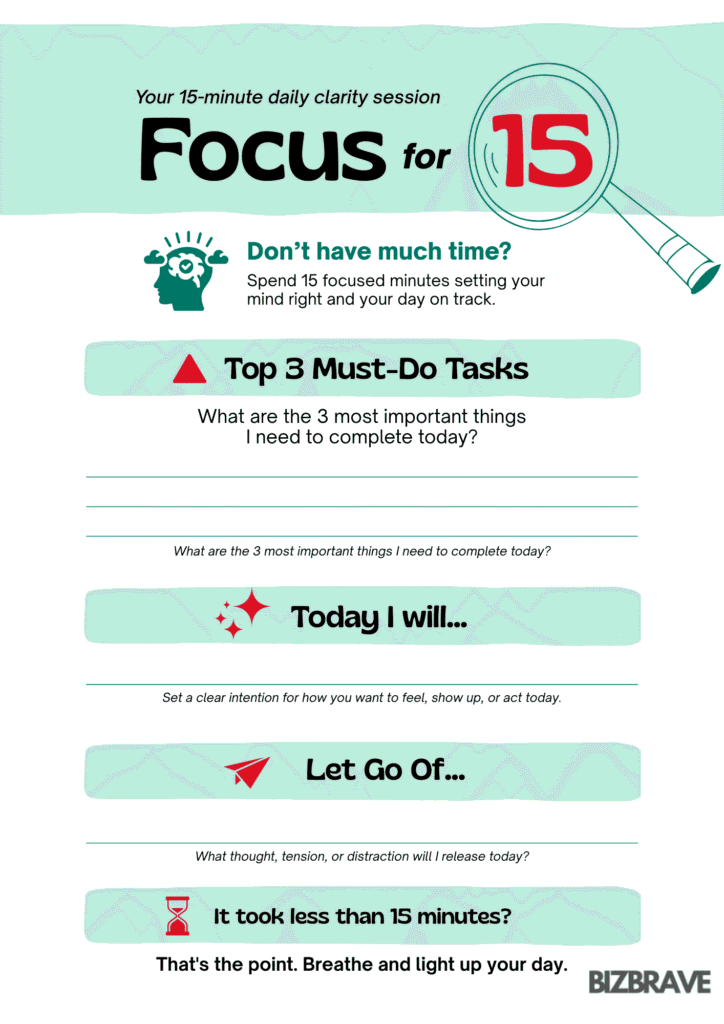
The problem of focus of small business owners.

Consideration is hard nowadays not due to lack of discipline among business people, but due to normalcy of distraction. Most of the owners think that one of the responsibilities is being around 24 hours. Productivity is in fact being killed by the very fact of constant availability.

There are special challenges that face the owners of small businesses. They are in charge of various functions, make fast decisions, and remain active in the day-to-day operations. In contrast to big organizations they are not always able to delegate everything. It results in frequent interruptions which are inevitable.

Mental overload is another significant problem. Everything is significant resulting in nothing being given due attention. The day is unstructured, and it becomes full of reactive work. The owners continue to respond rather than being strategic. This would eventually result in burnout, frustrations, and stagnation.

Deeper work is challenging

As there exists no definite structure to defend concentration.

The Price of being distracted in a Small Business. Distraction is not only a waste of time. It creates hidden losses. Decisions become rushed. Planning becomes shallow. Performance becomes haphazard. The owners of businesses have gone to work more hours to keep abreast.

According to my own experience, distracted owners usually encounter the following issues:

  • Unfinished projects that continue dragging months on.
  • Inappropriate use of business software and systems.
  • Sloppy errors because of not being reviewed.
  • Continuous firefighting not systematic growth.
  • Without significant advancement mental exhaustion.

The greatest expense is the opportunity cost. The lack of time to think in depth prevents owners of businesses to have opportunities to maximize their margins, stream line their operations and develop scalable systems.

The Case Why Deep Work Is a Game Changer to Business Owners.

Deep work assists the owners of the business to appreciate the leadership mode rather than the reaction mode. Owners begin to create superior systems that minimize problems instead of fixing them (Nixon, 2003). When the owners engage in deep work on a routine basis, they will feel: Clearly thinking and decision making. Quick implementation of significant projects. Better business frame work.

Deep work does not have to do with working harder. It is concerned with working deliberately.

Determining Deep Work Tasks in Your Business.

The first step is clarity. Not all things should be given large attention. Owners of businesses should determine the activities that do make a difference. The easiest method to determine deep work activities would be to question, what is the best thing to do today that will enhance my business most of all? The small business owners are engaged in common activities of deep work which include: Business strategy and planning. Process and system design Cost optimization and financial review. Operation and inventory enhancement.Examining sales and customer performance. On identifying these tasks, these must not be regarded as optional work but as high priority work.

Time Blocking: The Deep Work Foundation.

Deep work is not an automatic occurrence. It must be scheduled. Urgent tasks will always prevail in absence of time blocking. Time blocking refers to time-blocking where you set up a particular time in your schedule to dedicate to work. This is a time that needs to be guarded as a crucial appointment. A workable solution in the case of the small business owners is to begin small. Daily 60-90 minutes of focus are sufficient to achieve the results. Mornings are usually the most productive since the distractions are less and the energy of the mind is high.

Even four to five deep work sessions per week would make a substantial change with time. Developing a Distraction Free Environment. Focus is significant in environment.

The practical steps that can be used in the real business environment are:

Sifting out the unnecessary browser tabs. Quitting social media on areas of concentration. Reminding team members on focus time. Elimination of emails and messages when you are deep into your work. Productivity should not be understood as availability. Due to the focus protection by the owners, they eventually achieve superior customer and team outcomes.

Working in Cycles rather than Long Hours.

Most entrepreneurs think that extended working hours will resolve the productivity problems. As a matter of fact, mental energy is finite. Working deeply must be in cycles. A deep work loop is healthy and involves a short rest after a focused work. This makes the mind fresh and less fatigued. An attempt to push long, continuous working hours tends to burn one out. It is quality of focus that is important and not quantity of time.

In-depth encompassing and Business Systems.

One needs to think, analyze and plan in designing and improving systems, which cannot be done when distracted. Those who invest time in thorough work on systems improvement usually have a less challenging process, less mistakes, and increased transparency. In the long run, this will lower the daily stress and enhance scalability. Technology in itself is not the solution. Concentrated execution does.

Delegation and Deep Work

A misperception regarding deep work is that it implies that one must do everything on their own. As a matter of fact, deep work enables more delegation. Whenever the owners make rational decisions, they can know which tasks can be outsourced and which they should be involved.

Deep work assists in the role definition, expectation setting, and documentation. This minimizes disruptions and reliance of the owner in making routine decisions. When there is clarity, the delegation is better.

Simple Deep Work Routine of Small Business Owners.

The structure creates equilibrium between focus and availability without pressure. Top 10 Follies made by business owners with Deep Work. Most owners abandon deep work after they desire quick payoffs. Deep work is a practice that is accumulated.

Common mistakes include:

  • Attempting to multitask at focus.
  • Overbooking classes by giving excessive assignments.
  • Deep work must be a challenge but not too difficult.
  • Punishment is dignified with training.

My Biz Experience as an Entrepreneur.

The majority of business owners are not short of tools and knowledge in my consulting experience. They do not have time to think continuously. As soon as they incorporate deep work into their lifestyle, they begin to perceive problems objectively rather than respond emotionally.

Deep work owners remark that they feel more confident, relaxed, and in control. Their business organizations are organized and decision making is enhanced. Development becomes planned instead of being incidental. Deep work assists the owners to abandon their survival mode to strategic leadership.

Final Thoughts

Focus has become hard to find in the world of distractions. Deep work is no longer just an option to the owners of small businesses. It is needed to be clear, to grow, and to be sustainable. Deep work does not involve costly equipment or radical changes.

It needs to be enlightened, organized, and dedicated. A single concentrated session on a day-to-day basis can change the way a business runs in the long run. When you are too busy and stalled, then it is not a lack of effort. It is focus. Begin to safeguard your deep working hours, and your company will begin to move into focus and strength.
Productivity Systems for Entrepreneurs: A Practical Guide That Actually Works 2026

Productivity-Systems

Productivity is the business concept which is misunderstood. Most entrepreneurs are of the view that productivity is a measure of working harder, responding to more messages or to complete more jobs within a given day. Factually, real productivity is doing the right work at the right time in a clear consistent manner.

We as entrepreneurs can never stop our duties. The needs of strategy, sales, operations, team management, follow ups, finances and learning are all demanding our attention. In the absence of an appropriate productivity system, the day dominates us rather than us dominating the day.

This is not theory. These are practical applications that I observed working in small businesses, start-ups and older organizations.

What Does a Productivity System Mean?

Productivity system is a system of organization of tasks, time, energy and priorities. It is neither a tool nor an app, tools supplement systems, but they do not substitute them.

Productivity system is useful in that it aids you to record all that you need to attend to so that nothing remains in the head. It aids you in clearing your mind on what is really important. It helps you to make decisions on what to do at this time, what to plan, what to delegate and what to drop. Most of all, it will assist you in performing without any burnout.

A productivity system is not aimed at making you faster. The idea is to ensure that you become useful.

Successful Productivity Systems that Work with Entrepreneurs.

No one has a best productivity system.The correct system is based on your stage of business, the team size and working style. These are the most viable systems that have always worked when implemented properly.

Getting Things Done System

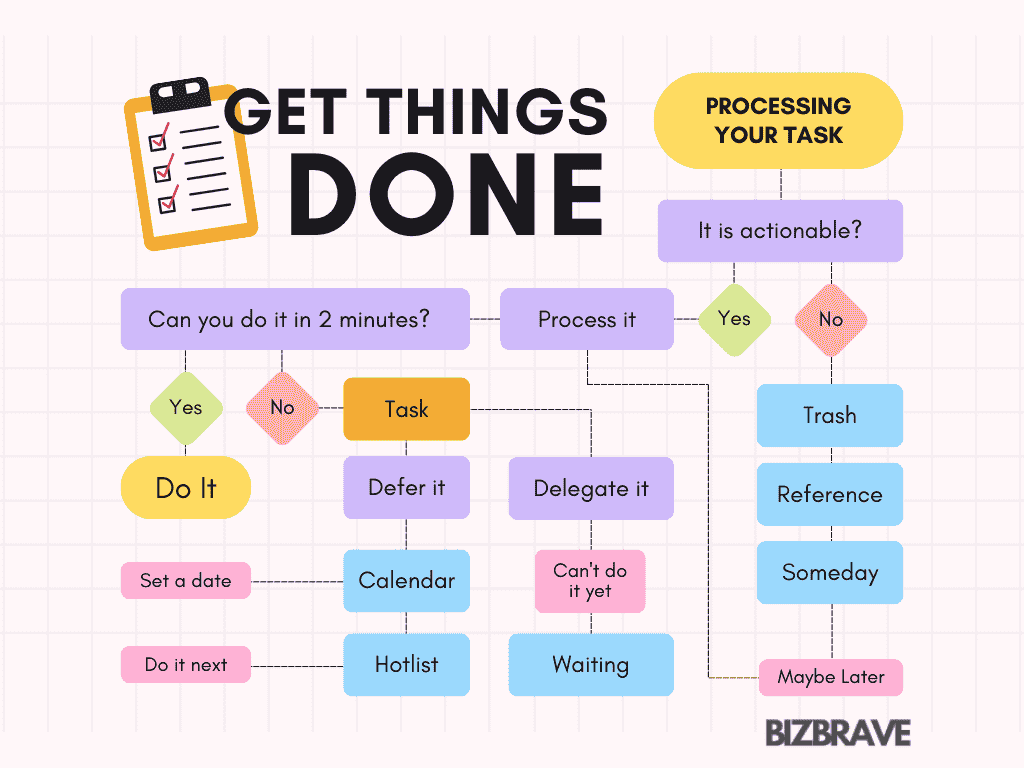
Getting Things Done is among the most popular systems of productivity among business people and executives. Its core idea is simple. Thinking is what you are supposed to do with your mind, not recollect. All the areas that require concern must be enclosed in a treasured system.

Getting Things Done System

It entails the process of putting all the tasks on the table, demystifying and making sense of each task, putting them into categories, reviewing them regularly and approaching them confidently. This system is very helpful among entrepreneurs who are dealing with many projects at the same time as it lessens the amount of mental burden.

Personally, I find that GTD is most effective when it is combined with weekly reviews.Even the best system goes to pieces without reviews.

Pomodoro Method on Concentration and Vigor.

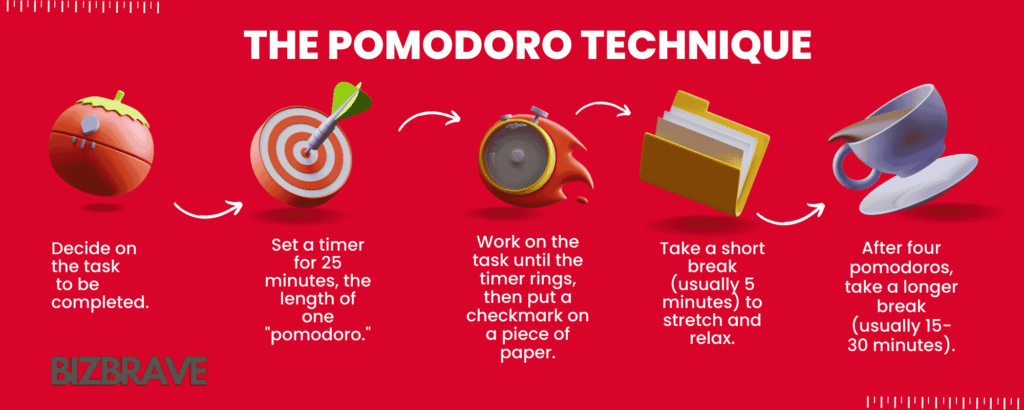
The Pomodoro Technique is based on the short and intense working periods and breaks. It is particularly handy with business people that are easily distracted or mentally exhausted. This is a better way of attaining focus without being subjected to lengthy working hours. It does not burn up energy, that is vital to long term performance.

Kanban Visual Workflow Management.

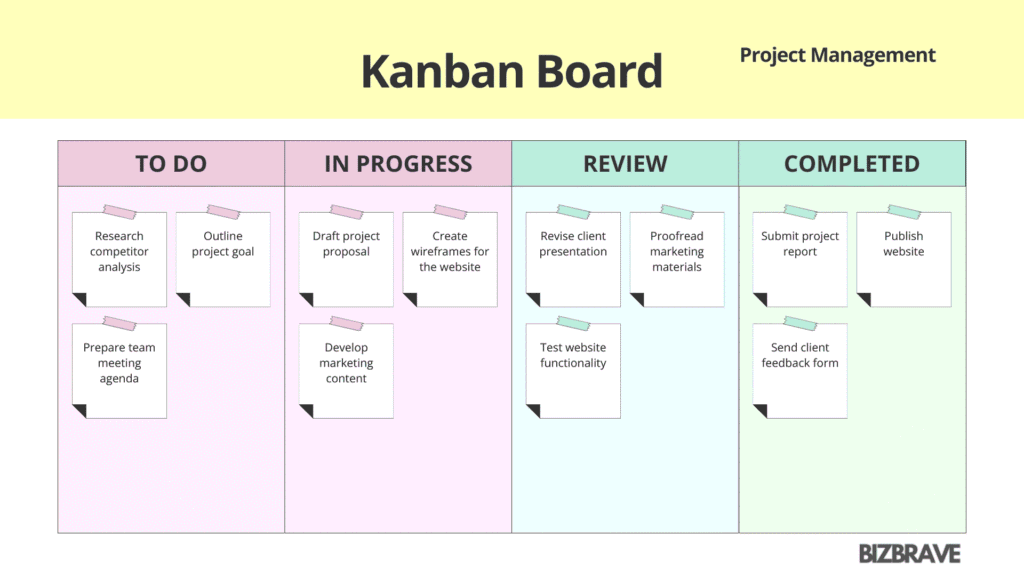
Kanban best suits entrepreneurs who have to handle teams or several work processes.Activities are represented in a visual way in columns like the to do, in progress, and completed. This transparency enhances responsibility and decreases work overload. Kanban is highly effective in operation, content planning, and sales pipeline. With visibility of work, the bottlenecks are clearer and easier to correct.

Priority Control Eisenhower Matrix.

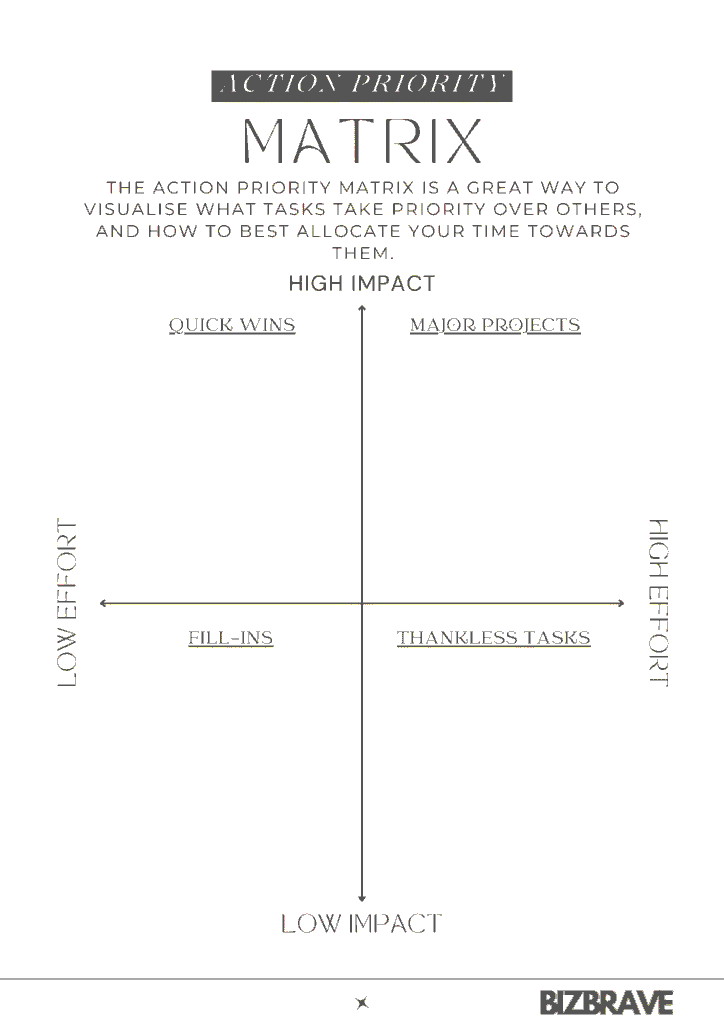
The Eisenhower Matrix assists the entrepreneur to isolate urgent and important tasks.Most business owners use the majority of their time working on urgent yet low value tasks like the need to reply to every message immediately or solving minor operational problems.

Most business owners use the majority of their time working on urgent yet low value tasks like the need to reply to every message immediately or solving minor operational problems.

Entrepreneurs build long term growth by deliberately concentrating on significant, and yet not immediate problems such as planning, hiring, system building, and learning. This system will be training your brain to think in a strategic rather than a reactive way.

Generally, I will recommend this system to founders who always seem to be busy yet nothing much appears to be happening.

Eat the Frog Method of Implementation.

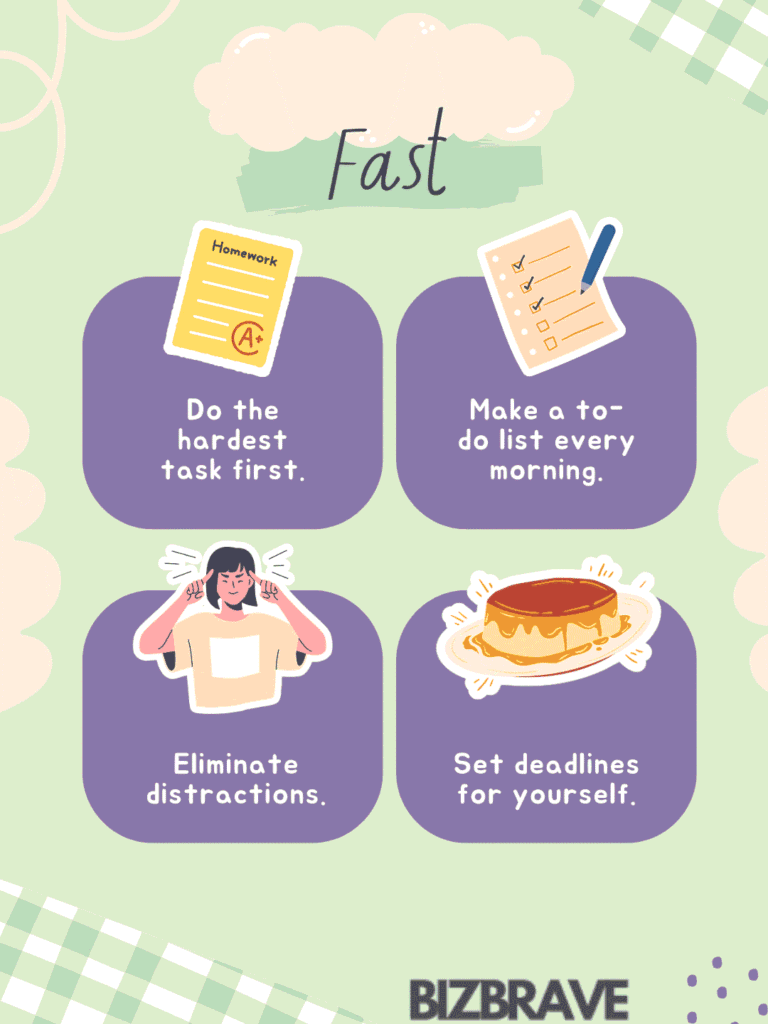
Eat the Frog method is very simple and effective. You begin your day with the hardest task to complete and the most significant one. This is one habit that enhances confidence, focus and momentum. Entrepreneurs have the habit of postponing unpleasant activities such as follow ups, negotiations, or planning. This technique makes you have to deal with them at the beginning of the day, which leaves mind space the rest of the day. On my side, this approach has enabled me to prevent procrastination in stressful moments in business.

The Productivity System that Suits your Business.

Rather than imitate the routine of another person it is preferable to create a system that is based on your business reality. The following is a viable strategy I would suggest.

Question yourself on what exactly drives your business. Examples include the growth of revenues, automation of the systems, development of the teams, and expansion of the market. Unpurposive productivity is a waste.

Planning each day must not take longer than ten minutes. Reviews on a weekly basis are not negotiable. Here transparency is rejuvenated. Lastly, make a commitment of at least thirty days. The fail of productivity systems is the situation when individuals prematurely leave their positions.

Reasons why entrepreneurs should have productivity systems more than anyone.

An employee is able to trust in directions, set working hours, and specific duties. An entrepreneur cannot. You determine what to work, when to work and how to work.Freedom is mighty, yet it is anarchy.

The same daily issues touch on most of the entrepreneurs. The to do list is never ending. Significant work is delayed as there is continually the emergence of urgent tasks. Meetings, calls, and emails are energy-consuming, yet they do not yield any results. You are not satisfied to be busy at the end of the day.

As my practice showed, those entrepreneurs, who implement even a basic system, begin to see the results only in several weeks. They feel less defeated, less dwarfed and more assured of their path.

Productivity Systems: Role of Tools.

Tools are facilitators but not solutions.Even the most high-tech software will not be as effective as a basic notebook with a powerful system without the comprehension. Task managers facilitate planning of work.The calenders assist in guarding attention by time blocking. Repetitive work is decreased with the help of automation tools. There is better cooperation through communication tools. The key is integration. Your tools must be used to facilitate a single workflow and not to build in a series of fragmented systems. When consulting, I will always recommend companies to streamline tools prior to expanding.

Efficiency and Delegation among Businesspersons.

A significant productivity change occurs when the entrepreneurs are taught how to delegate. Most founders think that it is time-saving to do everything on their own.In reality, it limits growth. An effective productivity system will contain a well-defined delegation workflow. Clear expectations, deadlines and follow up mechanisms should be assigned on tasks. This will enable entrepreneurs to concentrate on strategy rather than operations. Delegation does not consist of loss of control. It is regarding the establishment of leverage.

Weekly Reviews Weekly Review as a Growth Habit.

Long term productivity takes place on a weekly basis. They make you look back and see what was good, what was not and what should be changed. In reviews, small business owners have to assess how they are doing towards the most important objectives, revisit priorities and clear mental debris. This practice in itself can be twice effective in the long run. I have observed that businesses change by such a simple move as implementing weekly reviews.

Business Growth and Productivity Systems.

Growth is directly influenced by the productivity systems. Businesses grow more sustainably and by spending time on high value activities, entrepreneurs will grow business in a shorter time. Increasing productivity will result in improved customer experience, quicker decision making, increased team performance, and less stress. Life evolves into a forecast rather than being random. This is the reason behind the fact that productivity is a business system, rather than an individual habit.

Common Pitfalls to Avoid

Common Pitfalls to Avoid Do not over engineer your system. Simple systems last longer. Do not imitate the influencers.

Avoid skipping reviews. Systems need maintenance. Above everything, do not mix busy work and productive work.

Popular Productivity Traps of Entrepreneurs.

It is only after knowing what usually goes wrong before discussing systems.

The most frequent pitfall is to use too many tools simultaneously. Entrepreneurs just skip one application to another in a hope that they might get a better productivity.As a matter of fact, additional tools tend to cause an increasing amount of confusion.

The other error is not executing before planning. Other founders take hours to plan their week and never do it because the plan is not realistic or not in correspondence with the energy levels.

Poor prioritization is also a problem to many entrepreneurs. All is serious, thus nothing really receives a proper attention.This contributes to the sluggish advancement of such priorities as business building, system construction, and strategic thinking.

Failure to review on a weekly or monthly basis leads to repetition of mistakes and the failure of productivity systems without a murmur.

Thoughts on the Final Reflection of Experience

This I can say after having worked with the entrepreneurs in various industries.Serious business growth does not exclude product productivity systems. They are foundational. You do not need to be perfect. You need to be consistent. Keep it small, keep it in order and change as your business changes. Productivity is not doing much. It is about doing what is most important, in each and every day. You can start a conversation in case you wish to develop a productivity system that is specific to your business stage, the size of your team, and your business expansion objectives. When systems facilitate ambition then the growth becomes easy.

5 Proven Tips to Boost Productivity in Your Workspace

The secret to success in the fast-paced commercial world of today is productivity. Businesses may increase productivity, boost employee happiness, and maintain their competitiveness in the market by optimizing their efficiency. However, it might be difficult to stay productive because exhaustion, inefficiencies, and distractions all impede advancement. We’ll look at five tried-and-true methods in this post to boost workplace productivity.

1. Encourage a Happy Workplace

Employee engagement and productivity are directly impacted by a healthy work environment. Workplaces that foster open communication, teamwork, and employee well-being are more productive.

How to Establish a Happy Workplace:

Promote Open Communication: Establish an environment where staff members are at ease offering suggestions, worries, and criticism.

staff Recognition and Reward: To maintain staff motivation, acknowledge achievements.

Create a Comfortable Workspace: Make sure there are few distractions, adequate lighting, and ergonomic furniture.

Encourage work-life balance by supporting flexible scheduling, breaks, and remote work opportunities when practical

ppy Workplace

2. Put Effective Time Management Strategies into Practice

One of the most important aspects of increasing workplace efficiency is time management. Workers frequently have trouble setting priorities, which can result in stress and missed deadlines.

Techniques for Time Management:

Utilize the Eisenhower Matrix to efficiently prioritize work by classifying them as urgent, important, and non-essential.

Make sure your tasks are Time-bound, Relevant, Specific, Measurable, and Achievable by setting SMART goals.

Use the Pomodoro Technique, which involves working in concentrated bursts of time (such as 25 minutes) interspersed with brief pauses.

Leverage Task Management Tools: To monitor progress and enhance responsibility, make use of platforms such as Monday.com, Asana, or Trello.

3. Make Use of Automation and Technology

Workplace productivity is significantly impacted by technology. Businesses may increase efficiency and save time and money by using productivity tools and automating repetitive operations.

How to Make Use of Technology:

Automate Repeated Tasks: To manage repetitive tasks like data entry and email responses, use AI-driven technologies.

Make Use of Collaboration Tools: Slack, Microsoft Teams, Zoom, and other platforms improve teamwork and communication.

Adopt Cloud-Based Solutions: Platforms for document sharing and cloud storage increase accessibility and optimize workflows.

Track Performance Metrics: To keep tabs on productivity trends and make wise judgments, use analytics software.

4. Promote Ongoing Education and Training

A more competent and driven workforce is the result of investing in employee development. Workers are more engaged and perform better in their positions when they have access to training and development opportunities.

How to Encourage Education and Growth:

Provide Frequent Training Sessions: Hold webinars, workshops, and mentorship initiatives.

Make Online Courses Accessible: Coursera, Udemy, and LinkedIn Learning are just a few of the platforms that provide useful skill development.

Promote Knowledge Sharing: Establish an environment where staff members share their knowledge and perspectives.

Encourage Career Advancement: Provide distinct avenues for advancement and career development.

5. Reduce Stress and Distractions at Work

Stressful and disorganized workspaces can drastically lower output. Employees can maintain attention and give their best work when distractions are recognized and removed.

Techniques to Lower Stress and Distractions:

Clearly Define Work Boundaries: Encourage staff members to define boundaries for personal and meeting tasks.

Put Noise Control Solutions in Place: For concentrated work, set up quiet areas or utilize noise-canceling headphones.

Promote Frequent pauses: Quick pauses help people focus better and avoid burnout.

Encourage employee well-being by providing wellness initiatives and mental health resources.

conclusion

A systematic approach that incorporates a happy work environment, efficient time management, technology integration, ongoing learning, and distraction reduction is needed to increase productivity in the workplace. Organizations can improve worker productivity, job happiness, and overall business performance by putting these tried-and-true tactics into practice.

Using these suggestions not only boosts output but also creates a work environment where staff members feel appreciated, inspired, and involved. Start using these tactics right now if you want to increase workplace productivity!